Showing posts with label Ecclesiology. Show all posts

Sunday, February 07, 2010

Christ, Kingdom, and Culture, Part 4: Horton

The last lecture that we will be discussing from Westminster Seminary California’s annual conference, Christ, Kingdom, and Culture, will be Michael Horton’s, titled “Christ and the Workplace.”

What stood out most was his insistence (which he also highlighted last year, and which doesn’t have much to do with his actual topic) that “God doesn’t need your good works, your neighbor does” (which is a quote from Luther). Horton’s point is that, ironically, it is the believer whose church is a “full-service community” replete with ministries for every niche demographic under the sun who will be least equipped to love her neighbor. The reason for this is that when churches adopt an “every-member ministry” model, the result is that the people who come spend all their time ministering to other religious consumers—not just on Sunday but throughout the week—to the point of exhaustion. When you’re up to here in ministry to other church-goers, who has time to help a neighbor with a leaky roof?

On the other hand, when we have a proper understanding of the way a church’s ministry works—namely, that Jesus serves the people through his ministers (you know, the guys who wear the black gowns), and the people get ministered to—then the congregation will actually be empowered on the Lord’s Day rather than sapped of all strength. Then, lo and behold, they can go out and do their good works for those who actually need them, like their neighbors.

This is why at Exile Presbyterian Church the top line of our liturgy says, “The Divine Service.” Yes, there is service going on, but it’s Jesus serving his people, and not so much the other way around. After all, it is the righteousness based on law that is characterized by desperate and frenetic attempts to get God to notice us (think: prophets of Baal cutting themselves with stones), while the righteousness based on faith is content to receive first, so that it can give afterwards.

So the next time someone says something like, “Church isn’t supposed to be about getting from God, but giving to him,” you can respectfully demur, and say that Horton told you otherwise....

Monday, November 30, 2009

There's No "I" in Worship

I made a statement in my morning sermon yesterday that struck some people as unsettling, but I plan to stick by it unless I can be shown to be wrong:

Worship, according to the New Testament, is an almost exclusively corporate, rather than individual, phenomenon.

Take for example what is arguably the locus classicus on the topic of worship: Jesus’ interaction with the Samaritan woman in John 4 (in which the word “worship” is used no less than ten times). If we try to substitute the contemporary understanding of worship for what our Lord and the woman are talking about, the dialogue makes little sense. Worship, in the parlance of our times, usually refers either to singing songs specifically, or more generally to whatever goosebumpy, “Hallmark Moments” our private devotions happen to yield. But what Jew or Samaritan in antiquity, if they were in their right minds, would have argued that one’s personal quiet times needed to take place on a mountaintop either in Jerusalem or Samaria? The very fact that the initial argument between Jesus and the Samaritan woman focused on the where of worship demonstrates that it was not private devotions that were being discussed since, as everyone knows, those can take place anywhere.

Even the well-known passage Romans 12:1, in which Paul speaks of “our spiritual worship” cannot be taken to denote individual private worship. The apostle urges the Romans to offer their bodies (plural) as a living sacrifice (singular), and he then launches into a discussion of the one body and its many members, thus indicating that the Romans’ spiritual worship was that which they offered in covenantal assembly.

And then when we add all the “let us draw near” passages of Hebrews, we arrive at a picture of worship that is corporate, collective, and covenantal.

This is not deny the Reformed categories of individual, family, and corporate worship. But in our day and age, characterized as it is by the atomization of society, it is the corporate nature of worship that needs to be drilled into the heads and hearts of God’s people.

That’s all I’m saying….

Monday, September 28, 2009

I Like My Ecclesiology Salty and Subversive

Chapter Two of Dual Citizens: Worship and Life Between the Already and the Not Yet is titled "The Irrelevance of Relevance: Grits, Salt, and the Assembling of the Saints." I begin the chapter by drawing a contrast between grits, the southern delicacy that has no taste of its own but instead takes on the flavor of what is added to it, and salt, the condiment that Jesus described as "good for nothing" if it loses the distinctness of its flavor. The purpose of this culinary observation is to show that the Christian church should be more like salt than like grits; in other words, instead of chameleonically changing our colors to adapt to the world around us, the church should seek to retain its distinctiveness and peculiarity in the culture.

Our sacred activity, such as hearing God’s Word and receiving the Lord’s Supper, therefore, is about as unique and countercultural as we can get, while our secular activity is just the opposite—it is thoroughly common. It is primarily on Sunday, therefore, rather than on Monday through Saturday, that believers display their peculiarity and distinc­tiveness from the world.

This means that the church’s main task, as simplistic as it may sound, is to be the church, to be, in the words of Stanley Hauerwas and William Willimon, “a new people, an alternative polis, a countercultural social structure.” They con­tinue: “The church does not exist to ask what needs doing to keep the world running smoothly and then to motivate our people to go do it . . . The church has its own reason for being, hid within its own mandate and not found in the world. We are not chartered by the Emperor.” This does not mean that the church ceases to be influential, but that the church’s influence is of an altogether different—and often unwanted—variety. “[We] seek to influence the world by being the church, that is, by being something the world is not and never can be.”
It seems to me that the evangelical church gets things precisely backwards at this point. Rather than being distinct from the culture on Sunday and part of the culture the rest of the week, they seek to be as distinct from the world as they can during the week, but as familar and non-threatening to the world as possible on Sunday. Hence the demand for Christian T-shirts and bumper stickers in order to stand out from the culture when they should be participating it it, and hence the market-driven desire to supply tailor-made worship experiences for Christian consumers (be they traditional, contemporary, or emergent) when they should be expressing their otherworldliness. Michael Horton is spot-on when he describes this approach as "ecclesial apartheid."

Darryl Hart has argued that the church's attempt to be relevant inevitably results in our sacralizing the secular and trivializing the sacred. Instead, argues Horton, "genuine relevance is found not when the church tries to be relevant, since repeating what people already think is rather boring. Genuine relevance is found in contradicting the wisdom of the world that we entered the church with on Sunday morning."

When the church fails to embrace this salty and subversive role in the culture, then, in the words of Stanley Hauerwas and William Willimon (quoting Barth), "God is reduced to 'MAN!' said in a loud voice."

Wednesday, July 22, 2009

The Big Apple Versus The Growers of Big Apples

Always the provocateur, Darryl Hart has written an interesting piece for Front Porch Republic titled "If Cooking Slowly and Growing Organically are In, Why Is Rural Ministry Out?" In it, Hart highlights the irony that amid all our praise of Slow Food and organic food production, our attitude toward ministry is one area in which we are still unabashed city folk.

Signs are not encour-aging ... that the growing concern among evangelical Protestants about the environment is having any effect on their church’s estimation of the people who work on farms and live near them. A recent story in Christianity Today on Tim Keller, a popular Presbyterian pastor in New York City, suggests that for all the desires that evangelicals have to be cutting edge and socially aware, a ministry accessible to the rhythms of farming and local communities does not qualify as hip. The story fawns over Keller for his ability to carve out a multiple-congregation structure in the Big Apple, for a theology of the city that says cites are where redemption happens, and for the model of ministry he exhibits to a crop of younger pastors who aspire to make an impact.

According to the news story, “New York attracts the best and the most ambitious.” Keller senses this and ministers accordingly. He told the reporter, “Suppose you are the best violist in Tupelo, Mississippi. You go to Manhattan, and when you get out of the subway, you hear a beggar playing, and he’s better than you are.” One of Keller’s former colleagues puts Keller’s understanding of ministering in the city this way: “Paul had this sense of, I really should go talk to Caesar. He’s not above caring for Onesimus the slave, but somebody should go to talk to Caesar. When you go to New York, that’s what you’re doing. Somebody should talk to the editorial committee of The New York Times; somebody should talk to Barnard, to Columbia. Somebody should talk to Wall Street.”
(No offense intended to the violinists of Tupelo, I'm sure. I mean, you're from Mississippi, for crying out loud! Surely you didn't expect to best the Big Apple's beggars, didja? Know your place, is what I'm saying.)

Perhaps lurking behind this infatuation with The City (yes, I capitalized it on purpose), Hart suggests, is the desire to "elevate one's status by hobnobbing with the influential" coupled with a "born-again infatuation with celebrity." Then, when you factor in evangelicalism's absolute fear of the ordinary, you've got a perfect recipe (ahem) for the kind of elitism that sees the inexperience of young ministers as disqualifying them for urban church planting while not standing in the way of their ministering to simple farm folk (at least until they graduate from fly-over country to the corridors of power).

Evangelicals are disposed to understand grace and faith in extraordinary categories and so overlook stories of ordinary believers, routine piety, and even rural congregations as insignficant. Discontent with the average and routine aspects of natural life and of grace appears to breed a similar dissatisfaction with humble ministries in places of little interest to the editors of the Times.
I've said it before and I'll say it again: The appreciation for the ordinary that amillennialism produces is as difficult to reconcile with postmillennial transformationism as faith is with sight, and as the cross is with glory.

Wednesday, July 15, 2009

I'm Protestant, Therefore I Shop?

In his post entitled “Ecclesial Consumerism vs. Ecclesial Unity,” Covenant-Seminary-graduate-turned-Catholic Bryan Cross writes:
One is an ecclesial consumerist if one's decision regarding which "church"
to attend is based on anything other than this question: Which institution is
the one founded by the incarnate Christ?
While I appreciate Cross’s attack upon ecclesial consumerism as well as the humble and irenic manner by which he argues his position, I must question, from the perspective of my own experience, the simplistic and reductionistic nature of this statement.

For my own part, one of the things I appreciate about Reformed ecclesiology in general (as well as my own church’s worship in particular, if I may toot my own horn) is the very fact that that we refuse to give people what they want, and instead insist on giving them what they need, even if this results in a lesser degree of “success” as defined by American evangelical criteria. In other words, there are certain things that I, individually speaking, would want in a church, such as an elaborate children’s program, professional-sounding music, and messages that tickle my (fallen) sensibilities as well as funny bone.

You know, like Mark Driscoll does.

But despite the pressure to grow in terms of both nickels and noses, faithful Reformed churches have deliberately and decidedly determined not to give ecclesial consumerists what they want. Do we claim to be the church that Jesus founded? Not exactly. But have we therefore fallen prey to the consumerism that characterizes churches like Saddleback or Mars Hill?

Not by a long shot.

Sunday, July 05, 2009

Abraham's True Sons, Alexandria's True Bishops

The other day I was directed to a fascinating discussion on the Puritan Board (which I've subsequently joined) on the topic of Sola Scriptura. The thread was started because one of the members was being challenged by a friend who had been investigating Catholic and Orthodox theology and began challenging him about whether the Bible and the early church fathers teach that Scripture is the believer's sole authority on matters of doctrine and practice.


Now, as I read the various responses (some characterized by heat, others by light), I did notice a fair bit of straw-man argumentation. But fallacies aside, there were also a lot of quotes from church fathers that seem to indicate that true apostolic succession is what Protestants say it is, namely, a succession primarily of doctrine, with the issue of physical, laying-on-of-hands succession being a matter of historical coincidence and nothing more. Consider this quote from Gregory of Nazianzus (330-389):

Thus, and for these reasons, by the vote of the whole people, not in the evil fashion which has since prevailed, nor by means of bloodshed and oppression, but in an apostolic and spiritual manner, he is led up to the throne of Saint Mark, to succeed him in piety, no less than in office; in the latter indeed at a great distance from him, in the former, which is the genuine right of succession, following him closely. For unity in doctrine deserves unity in office; and a rival teacher sets up a rival throne; the one is a successor in reality, the other but in name. For it is not the intruder, but he whose rights are intruded upon, who is the successor, not the lawbreaker, but the lawfully appointed, not the man of contrary opinions, but the man of the same faith; if this is not what we mean by successor, he succeeds in the same sense as disease to health, darkness to light, storm to calm, and frenzy to sound sense. NPNF2: Vol. VII, Oration XXI - On the Great Athanasius, bishop of Alexandria, §8.
Gregory seems to be saying that "the genuine right of succession" is rooted in a bishop's piety, without which he, though enjoying literal apostolic succession, is "only a successor in name." One is reminded of the argument both of Jesus and Paul that Abraham's true succession of children is traced not through physical lineage but through something not quite as visible, but nonetheless ar more important, namely faith.

Thoughts?

Sunday, June 28, 2009

The Complexities of Confessionalism

Say what you will about Peter Leithart, but when it comes to his theology, the man just plain ol' doesn't care about anything other than that it is biblical.

Is this a bad thing?

When the study committee which he and I petitioned the Northwest Presbytery of the PCA to form began its work, Leithart's only request was that, in addition to comparing his views to the Westminster Standards, we also take the time to engage his work from the vantage point of Scripture. It was obvious that this latter concern far outweighed the former in his mind.

The conclusions of the minority report that I authored were that Leithart's positions, though biblically defensible to a certain degree, were nonetheless clearly contrary to the system of doctrine found in our Confession and Catechisms. The problem, the minority argued, was that he failed (or was unwilling) to read the Bible through the lens of the doctrinal standards of the PCA. And Leithart's response, in a nutshell, was "Isn't being biblical enough?"

Hence the complex nature of Reformed confessionalism. On the one hand, we recognize that there is no "view from nowhere," and that we simply cannot read Scripture in a lens-less, objective, Cartesian way. All of us bring presuppositions to the interpretive table. On the other hand, though, we don't want to be accused of simply reducing the Bible to the confession's handmaiden, as if Scripture is merely a collection of prooftexts to buttress one's own systematic theology.

An example from Leithart's own views would be the fact that Paul says in Romans 6:7 that the baptized believer has been "justified from sin." Clearly, Leithart argues, the word "justify" is being used as a kind of synonym for "sanctify," and not to denote God's one-time declarative act of pardon and imputation of alien righteousness. Our understanding of the term "justification," therefore, ought to be broad enough to include this usage, as well as the OT's usage of tsadaq in contexts were the issue is deliverance from enemies, not forensic acquittal.

I admit, I can see Leithart's point and can understand his frustration at being told "No, you must not echo Paul's language since it contradicts our theology." But at the same time, is there not a place for being a team-player and being willing to employ terminology that tries to avoid confusing people unnecessarily?

The options, as I see them, are as follows: confessional denominations like the PCA can either (1) broaden our theological parameters to make room for someone who can make a case that his theology is biblically plausible, or (2) we can insist that our ministers at times must avoid speaking the Bible's language for fear of muddying the systematic waters.

And I must say, I'm not completely thrilled about either of those choices (but then, who ever said being confessional would be easy?).

Thursday, May 14, 2009

Tyrants in the Pulpit, Victims in the Pew

There is a pastoral element to the two-kingdoms model that many people fail to appreciate. One of the main functions of this way of thinking is to protect the congregation from ecclesiastical tyranny, and more specifically, from being subjected to a constant onslought of extra-biblical opinions being forced upon them by their ministers.

The reason for the failure to appreciate this, I think, is that when a theory is being implemented properly, you just don't really notice when it avoids potential problems. I mean, if I had cancer or leprosy or some other such malady, I'd probably notice that I suffer from them. But how often do I notice my not-having-cancer-or-leprosy condition? Pretty much never.

Now a pastor could never actually pull this little stunt off, but I think it would be a fun experiment for a minister who holds to the two-kingdoms model to subtly depart from it for a few months without telling anyone. Preach the cross and empty tomb a little less, and preach about social issues a little more. This would work especially well if said pastor's views on cultural matters were not exactly the "correct" ones that the congregation would agree with.

Can you imagine it?

"OK, this Sunday at Random Presbyterian we're beginning a new 16-week series of sermons entitled 'The Christian Worldview.' In the weeks to come we'll be considering from Scripture such exciting topics as 'War ON Terror or War OF Terror?', 'Love Thy Neighbor: A Defense of Universal Healthcare,' and my favorite, 'Nike: Shoe Company or Babylon Mother of Harlots?'"

As silly as this sounds, it demonstrates precisely what the doctrine of the two kingdoms protects the church-goer from. In other words, it's all fine and dandy to beg your minister to speak out against cultural evils, but what happens when he takes your advice and rails against issues you support and defends the ones you decry?

We have six days out of every seven to "do earth," so on Sunday you'll just have to pardon my heavenly-mindedness and forgive me if I want to focus on things like Word, water, and wine. If this is "irrelevance," sue me, because the day I become "relevant" as defined by this age is the day I quit pastoring and take up professional punditry.

Monday, March 16, 2009

Remember, With Moxy, Your Own Orthodoxy....

I have touched on this topic before, but perhaps it merits a revisiting in light of recent comments. There are two kinds of "orthodoxy" in my view. The first (we'll call it Big-O Ortho-doxy) represents those things which must be believed in order for a person to be a Christian in any meaningful sense of that word. Most traditions look to the Apostle's and Nicene Creeds as examples of Big-O Orthodoxy.
.
Then there are various little-o orthodoxies that compete with one another for the other, umm, non-essential doctrines (I shuddered a little just now).

So while any claim to Orthodoxy must include a correct understanding of, say, the divinity of Christ and the hypostatic union of his two natures in one Person, where one stands on the issue of the metaphysics of the Eucharist or the timing of Christ's return may play a part in the orthodoxy of whichever tradition one may be a part of, but they do not affect Orthodoxy with a Big-O.

So for example, Calvary Chapel's orthodoxy demands a belief in the pretribulational rapture, while the PCA's insists on the doctrine of imputation, and Rome's orthodoxy includes the immaculate conception and assumption of the blessed virgin Mary. But all three of these traditions would affirm the tenets of the Nicene Creed (even if, as in our first example, they've never heard of it).

So when the question is asked, "Can your tradition guarantee orthodoxy?", we need to determine what the interlocutor means by "orthodoxy" before we can answer. If he means Big-O Orthodoxy, the answer is "Yes," because if a person in just about any Christian church denies the tenets of the Nicene Creed he will be disciplined, and if the entire church denies them, they will be relegated to the status of a false religion such as Mormonism or the Watchtower Bible and Tract Society.

But if the questioner is asking whether a tradition can guarantee little-o orthodoxy, well, the question is somewhat redundant. Can the PCA guarantee belief among its members in the doctrine of imputation? Can Calvary Chapel ensure that its pastors hold to Dispensational eschatology? Can Rome guarantee that those in her communion affirm transubstantiation? Well, with varying degrees of success, the answer is pretty much "Yes."

But when we identify Orthodoxy with orthodoxies of whatever stripe, the question "Can your tradition guarantee orthodoxy?" becomes meaningless. No, the PCA cannot guarantee belief in the immaculate conception any more than Rome can protect the sanctity of the seven-year tribulation or the "Moses Model" of pastoral ministry.

And for the record, all churches hold to this distinction, whether they admit it or not.

Thursday, March 12, 2009

Let Them Eat Cake!

I like cake. But the thing is, I like to eat it, too.

Because of this tendency, I often shy away from arguments against Catholicism that take as their launching point the various abuses and aberrations of the church throughout the centuries, as if the Protestant's only problem with Rome is the occasionally opulent pope or abused altar boy. In other words, a robust Reformed argument against Rome would focus not only on what it became, but also on how it began.

If all we focus on are the incidentals, then is not this a tacit admission not only that the solution to Rome is not Protestantism but reformed Catholicism, but also that our entire ecclesiology is a convention arising post hoc, a reaction to biblical Christianity gone awry instead of a return biblical Christianity itself? Don't miss the import of what I'm saying: if we focus solely upon Rome's abuses, we are surrendering not only all exegesis, but also conceding that Jesus did in fact intend to found a visible church characterized by apostolic succession and Petrine primacy, but once that church messed things up, we came along with a bunch of new ideas about invisible churches and Sola Scriptura.

To put it bluntly, Protestants need to argue for Protestantism, not just against Catholicism, and we need to do it from Scripture, as if (gasp!) Jesus actually intended something akin to Reformed ecclesiology all along. Why would we be comfortable with anything less? I mean, what are we, Protestants or simply non-Catholics?

So let's not shoot ourselves in the foot by just settling for cake. Let's go the next step and demand to eat it, too.

Monday, January 19, 2009

On Pleasantville and the Visible Church

As our discussion seems to have morphed into one about the visible vs. invisible church, I think a valid question that arises (but is not begged) is, “What, exactly, is a ‘church’?”

I would argue that a “church” is a self-governing ecclesiastical body that administers the Word and sacraments, meaning that a pastor-led congregational assembly is a church, Calvary Chapel as a whole is a church, and the PCA is a church (I’m putting aside for the moment the issue of whether these churches are any good).

And according to this definition, the Catholic Church is also a visible church.

The tricky part, however, is determining whether Protestants believe in a visible church at all, or simply in visible churches. If I visit a Missouri Synod Lutheran church I will be denied the bread and cup, despite the fact that I’m a Presbyterian minister. If one of my kids joins a Calvary Chapel (shudder) in high school, he or she will be offered a re-baptism, one that “really counts.”

So much for the sacraments having anything to do with unity in our circles....

So for better or worse, we Protestants must function as though “church” = “autonomous local body” or “denomination.” Perhaps some space could be made for a group like NAPARC (to which most conservative Reformed and Presbyterian denominations belong), but that is only a loose affiliation with no real jurisdiction or control over what, say, the PCA or OPC do.

Once we have sufficiently convinced ourselves that the visible church is small enough only to contain those who are under the authority of our particular denomination or body, then we can allow passages like Matthew 16:19 to play a significant role in our ecclesiastical practice. When someone becomes unrepentantly delinquent in doctrine or morals, we exercise our proper jurisdiction and remove such a one from our assembly.

But while all of this painful, sober, and faithful discipline happens we have this nagging thought in the back of our minds that the excommunicated person can just run out and join one of many other churches in the area, and that the chances that those churches will take seriously our disciplinary sentence are slim to nil. So he’s not really “delivered over to Satan,” but delivered over to Lakeside Community Church.

My point is two-fold. First, Protestantism doesn’t really believe in a visible church but in visible churches, and secondly, it is only in the context of any one of these distinct churches that spiritual authority and discipline make any sense. But like the residents of Pleasantville, once the members of an isolated church figure out that Main Street is not a big circle but a line that could dangerously lead to other ecclesiastical options, the game could very well be over.

This is a problem that needs to be fixed. But how?

Wednesday, January 14, 2009

Cogito, Ergo Sum [Protestant]?

On his blog Pontifications, Fr. Kimel puts forth a kind of Van Tilian, presuppostional defense of the papacy, building his case on the argument of Cardinal Manning, whom Kimel quotes at length:

The doctrines of the Church in all ages are primitive. It was the charge of the Reformers that the Catholic doctrines were not primitive, and their pretension was to revert to antiquity. But the appeal to antiquity is both a treason and a heresy. It is a treason because it rejects the Divine voice of the Church at this hour, and a heresy because it denies that voice to be Divine. How can we know what antiquity was except through the Church? No individual, no number of individuals can go back through eighteen hundred years to reach the doctrines of antiquity. We may say with the woman of Samaria, “Sir, the well is deep, and thou hast nothing to draw with.” No individual mind now has contact with the revelation of Pentecost, except through the Church. Historical evidence and biblical criticism are human after all, and amount at most to no more than opinion, probability, human judgment, human tradition.

In the same way that a Reformed presuppositionalist would argue that it is a subtle display of rationalism to demand evidence for God's existence or the veracity of Scripture, so Kimel, echoing Manning, is insisting that it is also rationalism to insist that the Catholic Church's claims about its papal authority be historically proven.

The reason why such evidence is demanded, Kimel admits, is that the pope is the very icon of scandal and offense in the eyes of many.

I grant Manning’s point, yet still it seems appropriate to ask for evidences to support the Church’s teaching on the papacy. The Pope is, after all, is the rock upon which so many stumble. Even Paul VI conceded that “the pope—and we know this well—is without doubt the most serious obstacle on the ecumenical road.” The pope hypostatsizes the skandalon that is the Catholic Church.
I must admit, this argument is clever (if not a bit too convenient as well), for it puts Protestants in the unenviable position of having to sift through the historical data on the church and weigh it in the balances, all the while disassociating it from the testimony of the very church it is seeking to understand. Better, Catholics would argue, to simply believe the Church on its own authority than to subject it to the bar of human reason and inquiry.

In a word, apply all the stuff Van Til said about Scripture to the Catholic Church, and voila!, all our problems will be solved.

What do you think? Clever or convenient?

Tuesday, January 13, 2009

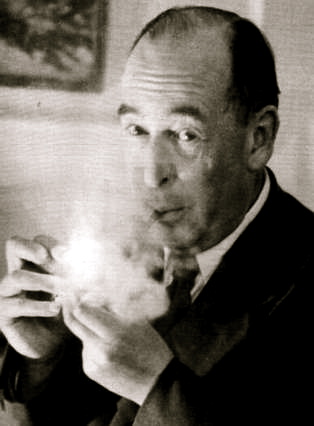
Preaching to the QIRE: Lewis on Liturgy

I came across this quote by C.S. Lewis in another book I’m reading. He is dealing with the essential nature of ritual and ceremony, highlighting the fact that many aspects of life—holidays for example—are marked off from the ordinary by means of special meals, special traditions, and special ceremonies. On “the language of a liturgy” Lewis writes:

Regular churchgoers are not surprised by the service--indeed, they know a good deal of it by rote; but it is a language apart…. [Liturgy] is a pattern imposed on the mere flux of our feelings by reason and will, which renders pleasures less fugitive and griefs more endurable, which hands over to the power of wise custom the task (to which the individual and his moods are so inadequate) of being festive or sober, gay or reverent, when we choose to be, and not at the bidding of chance.
When the church pursues what Scott Clark calls the QIRE, or, the quest for illegitimate religious experience, it places the believer in the impossible position of needing to achieve some level of spiritual feeling in order for his worship to pass as genuine and worth the hassle, all the while having no way of determining what that degree of experience is or measuring it once it has occurred.

But when we realize that we are inherently liturgical creatures (this, after all, is what separates our experience of birth, sex, and death from that of animals), then we will be free to embrace the structure of liturgy without being afraid that we will stifle the Spirit in the process. If the Spirit brought order to the original creation’s formlessness and void, is it not warranted that we understand him to bring order to the new creation as well?

Tuesday, December 30, 2008

Revival and the System of the Catechism

An interesting passage from high-church Calvinist John Williamson Nevin:

"It is a most unfair view of the system of the Catechism to think of it or speak of it as unfriendly to all special and extraordinary forms of action in the work of the gospel. The system, it is true, makes more account of the regular, the ordinary, and the general than it does of the occasional and the special....

"The extraordinary in this case, however, is found to stand in the ordinary, and grows forth from it without violence, so as to bear the same character of natural and free power. It is not the water-spout, but the fruitful, plentiful shower, causing the fields to sing, and the trees of the wood to clap their hands for joy. Such is the concept of a Revival.

"For such special showers of grace, it is the privilege of the Church to hope, and her duty to pray, at all times. To call into question the reality or the desirableness of them, is a monstrous skepticism, that may be said to border on the sin of infidelity itself.

"[Revivals] are the natural product of the proper life of the Church. Wherever the system of the Catechism is rightly understood, and faithfully applied, it may be expected to generate revivals in this form" (The Anxious Bench, 72-73, emphasis original).

Friday, December 26, 2008

Preaching to the QIRE

I have been away from home of late and don't have my copy of Clark's Recovering the Reformed Confession handy to cite directly, but there is a topic he addresses that I'd like to put forth for discussion. In one of his chapters he addresses the issue he calls the QIRE, or, the quest for illegitimate religious experience. One of this problem's main culprits, Clark argues, is the phenomenon of revival.

While an in-depth post on revival will probably have to wait until Monday, I am curious to hear your thoughts on the matter. Are revivals legitimate? If so, which ones, and by what criteria should we determine a revival's legitimacy? How much tension, if any, is there between confessional Reformed piety and practice on the one hand, and what many Banner of Truth authors call "experimental Calvinism" on the other?

Wednesday, December 24, 2008

Cultural Catholicity Versus Divine Demographics

Concerning the various rival catholicities that jostle for recognition in the world of Protestant missionalism, Michael Horton argues that what we really need is to jettison our incarnational attempts to force God to fit into the soap operas of our own lives and instead see ourselves as characters in his drama of redemption: "It is the church's responsibility to stage local performances of God's 'community theater' through concrete practices."

The biggest impediment to this, Horton points out, is the fact that so many ministers are better social critics than they are pastoral theologians and exegetes.

It is remarkable how confidently pastors and theologians address the social, moral, economic, and political issues of the day in comparison with the false humility often displayed in proclaiming the doctrines of Christianity.... However, catholicity is an essential element of the community that any genuinely Christian mission serves. When the gospel unites us, there are no Republicans or Democrats, youth or elderly, rich or poor, healthy or sick, devotees of hip-hop or classical music, black, white, Asian, Hispanic, or other, but fellow sinners absolved by the one who has all authority in heaven and earth to create his own demographic.
I think Horton is spot-on here. After all, the passage so often cited for cultural sensitivity (the one about Paul "being all things to all men") goes on to demonstrate how culturally insensitive the apostle actually was. Unless, of course, categorizing the entire world as either "Jew" or "Greek" counts as having one's ear to the ground and finger on the pulse.

Sunday, December 21, 2008

And on the Eighth Day the Market Said, "Let There Be Youth," and There Was Youth. And the Market Saw That It Was Good.

Continuing his diatribe against what he calls “ecclesial apartheid,” Michael Horton sets his sights on the holy grail of evangelical ecclesiology: youth ministry. In the same way that Madison Avenue created the youth demographic in order to sell stuff to them while they’re still naïve enough to believe the things Madison Avenue tell them, so the “catholicity of the market” pursued by many churches seeks to pander to this demographic in order to lure parents to the churches their kids like the best (advertisers refer to this as the “nag factor”).

The same market forces that drive us to disposable identities and perpetual novelty (planned adolescence) are tearing apart the fabric of genuine covenant community.... Generational narcissism has become a publicly accepted form of self-preoccupation since the 1970s, and each generation is profiled in such literature in the most hyperbolic terms. When marketing and sociology developed the demographic known as “youth,” the church created the “youth group.”
Horton then draws attention to the statistic that half of erstwhile churchgoing college freshmen are unchurched by their sophomore year. He argues that, given the perpetuation of “children’s church” and youth services, “instead of regarding them as having abandoned church, we might perhaps wonder if they were ever fully a part of one.”

We have learned to think as never before in terms of the uniqueness of over-stereotyped generations. Where church divisions used to be lamented as differences over doctrine, they are now celebrated as “megachurch” and “emergent,” as if each generation were an ex nihilo creation.
This gives rise to a couple interesting points. First, what is celebrated as “incarnational ministry” seems to be a prime suspect in perpetuating such market-driven catholicity, and second, this type of approach tends to de-emphasize doctrinal differences (cult) and over-emphasize demographic ones (culture). Hence Christian unity focused on a common confession of the gospel is marginalized in favor of a hegemonic uniformity driven by market forces.

We must reject the divide-and-conquer approach of rival catholicities, taking Paul’s question to the Corinthians—“Don’t you have homes to eat and drink in?”—and apply it to the churches of our own day: “Don’t you have your own social networking contexts like work, school, or Facebook to pursue your unique tastes in music, sports, or hobbies?” After all, the in-breaking of the age to come that happens in worship every Lord’s Day relativizes all times and places and jeopardizes our own cherished uniqueness in this passing age.

In a word, the phrase “the church in Corinth” should be read with the accent on the first two words, not just the last two.

Wednesday, December 17, 2008

The Visibility of Vinyl (Or, Put the Needle on the Record)

As many of you know I’m a bit of a music junkie, and I have been noticing a rather interesting trend as I read interviews with various artists about the state of music today. As unpredictable as it would have been a few years ago, there is a growing dissatisfaction among musicians toward digital music in general, and MP3s in particular. White Stripes frontman Jack White, when asked about the biggest challenges facing contemporary artists, said in a recent interview, “[The biggest challenge] is the fight against intangible music, the fight against invisible music.” He continues:

I hope that [in the next several years] there will be some balance between intangible music, invisible music and something that you can hold in your hand. A positive thing right now is that vinyl is staying alive, and record players are starting to be sold at stores again…. We can’t afford to lose the feeling of cracking open a new record and looking at large artwork and having something you can hold in your hands.
So many dots just begging to be connected….

Despite our Gnostic objections to the contrary, Adam Sandler’s character in The Wedding Singer was absolutely correct when he said, “We are living in a material world, and I am a material girl. Or boy.” Madonna was right and Sting was wrong, we’re not “ghosts in the machine” or “spirits in a material world,” but we are embodied, situated, corporeal humans who sometimes feel the need to “hold something in our hands,” whether it’s a new LP or a piece of bread and a cup of wine.

I cannot help but wonder if the sacramental instinct on the part of the confessional Protestant is not somewhat frustrated by our unfortunate inability to trace our visible churches back to the time of the apostles by means of an historical succession of bishops whose authority was conferred through something physical like the laying on of hands. I know, I know: neither Rome nor Constantinople—the two churches that do make this kind of claim—can match Geneva’s systematic and exegetical brilliance. But in the same way that we cannot but lament the near-disappearance of the 12" record due to the invisible MP3, so we must fight to protect the visible church from being eclipsed by the invisible one.

Vinyl skips, gets scratched, and cannot be downloaded, and likewise, the visible church is at times rather cumbersome and inconvenient. But so was that body that the second Person of the Godhead assumed, right? But we gotta believe it was worth the hassle.

Friday, December 12, 2008

Sun City, Saddleback, and Ecclesial Apartheid

I am preaching through Genesis on Sunday evenings (and having a good time doing it I might add), and we just looked at the Tower of Babel episode the other night. As many commentators point out, the confusion of languages visited upon the Babelites in Genesis 11 is reversed in Acts 2 as “devout men from every nation under heaven” are given to hear the mighty works of God supernaturally proclaimed in their own tongues.

In People and Place, Michael Horton highlights the fact that the now-united multitude still retained their distinctive tongues, the significance being that those who believed in Christ that day “were more perfectly one than any society, yet in a harmony of difference.... They were one because they shared the same things, not because they became fused into the same thing.” He continues:

As we survey the contemporary ecclesial landscape, however, this account of catholicity seems to be reversed. Whereas an almost infinite diversity of doctrine and practice is tolerated, even celebrated, churches are becoming more hegemonic than ever with respect to politics, socioeconomic position, age, gender, and cultural tastes. [He then makes a veiled reference to Rick Warren's Saddleback Church to illustrate his point.]
Horton’s term for the so-called “missional” obsession with target demographics is ecclesial apartheid, which is the very antithesis of the catholicity that was inaugurated at Pentecost and will become fully visible at the end-time harvest of sinners from all nations, tongues, tribes, and peoples. But “wherever Christ is the focus of catholicity and Word-and-sacrament ministry is the means, a genuinely multicultural and multigenerational community is generated.”

In the place of a “catholicity of the market”—which seeks to reverse cultural divisions with cultural commonalities—the church needs the kind of catholicity that arises not from the culture but from the cultus. This alone can prevent the church from becoming “a collection of consumers or tourists rather than a communion of saints and pilgrims.”

Contrary to the ecclesial apartheid of the missional movement, therefore, genuine catholicity is a necessarily churchly and supernatural phenomenon which secures for God’s people the ability to be one, but not the same.

(Am I bugging you? Don't mean to bug ya....)

Monday, December 08, 2008

Celebrating the Ecclesiastical Pigpen

Reformed Christians tend to be very skeptical when it comes to putting too much stock in human faithfulness (that pesky Total Depravity thing inevitably rains on our parade). In a word, we like it when God does stuff for us. Appropriately, then, Michael Horton writes:

Taking the catholicity of the church entirely out of our hands, election proscribes all overrealized eschat-ologies, whether they identify the pure church with a universal institution [read Rome] or with the sum total of the regenerate [read Münster]. Only in the eschaton will the visible church be identical with the catholic church. The union of Christ and his body—the one, holy, catholic, and apostolic church—is the eschatological communion of the elect, chosen “in Christ before the foundation of the world to be holy and blameless before him in love” (Eph. 1:4).
Horton argues that Calvin, following the Augustinian heritage generally, seen the Father’s election as the locus of the church’s catholicity.

It is this church that is indefectible. It must always have its visible expression in every era, but this visibility is always ambiguous because the church is a mixed assembly and even the elect are simultaneously justified and sinful.... The covenant of grace is the visible, already/not yet, semirealized form of the glorified communion of the elect in the eschaton.
A properly-realized eschatology necessarily leads to a willingness to settle for faith over sight (a principle betrayed by the Radicals and by Rome, for the former choose sight over faith by their emphasis on the visible piety of church members, while the latter replaces faith with sight by its insistence upon an historical continuity of succession in order to lay claim to ecclesial legitimacy).

The objection on the part of the Catholic or Orthodox believer will undoubtedly be that a so-called mark of the church such as catholicity that is invisible to the human eye is no real mark at all, for “invisible marks” are not only oxymoronic but are also useless for actually helping anyone locate the real church amid a myriad of pretenders. The real question for all of us, then, is how pristine an ecclesiology we have the right to demand, or, how messy an ecclesiology we are willing to tolerate.