Showing posts with label Federal Vision. Show all posts

Thursday, December 17, 2009

What Do "Apostates to Rome" and "Machen's Vitriolic Spawn" Have in Common?

I am honestly trying really hard to figure out why Mark Horne is mad at me this time.

As far as I can tell (and I'm open to correction here), his logic goes something like this: I have no business refusing to call Peter Leithart a heretic if I will allow an "apostate to Rome" (Mark's words) to subtly imply in the combox under my most recent post that the CREC may not actually be a part of the visible church.

(Insert image of head spinning around here)

Apparently, consistency demands that I treat Leithart like a heretic even if I don't believe he is one because, after all, someone on my blog whom I have never met made a comment that could potentially be construed as offensive to people in the CREC (and the person who made it is a Catholic, which is about as far away from being a rabid, Westminster-West member of "Machen's vitriolic spawn" as one can be. Oh, that description comes from one of Mark's commenters).

Well, while I fail to understand the logic of this post, at least I understand a bit better now why people like me are treated so disrespectfully by people like Mark Horne. The logic of internet consistency demands it.

Sunday, December 13, 2009

Further Reflection on the Judgment of the SJC Panel

One of the most interesting statements in the PCA's preliminary decision rendered by the panel of its Standing Judicial Commision is the following:

By appealing to Scripture... to justify positions that are out of accord with our Standards, an individual, or group, is in effect... amending the Constitution, not by judicial act, but by personal interpretation. If someone believes that the Standards have incorrectly or inadequately stated what Scripture says about a particular topic, then instead of ignoring what our Standards state and justifying their positions by personal interpretations of Scripture which are not consistent with the Standards, they should propose amendments to the Standards to clarify or expand the Standards, since our Constitution holds them out to be "standard expositions of the teachings of Scripture."
A couple thoughts in response to this. First, this calls into question the validity of the tactic used by Federal Visionists and others who insist that they are not contradicting what the Standards say by their suspicious expositions of Scripture, but only going beyond the Standards and saying more (this is done, we are told, so as to reflect more accurately what the Bible actually teaches).

My question at this point goes something like this: If the Westminster Standards teach that union with Christ is a saving and therefore non-losable benefit, but if I decide to "go-beyond-the-Sandards-but-not-contradict-them" by teaching my congregation that they may lose their union with Christ, how have I not fallen under the condemnation of the SJC's judgment above?

Secondly, how is it that Catholic and Orthodox believers can maintain that Reformed confessionalists are no different from the no-creed-but-Christ, just-me-and-my-Bible evangelicals when the PCA's highest courts says that "by appealing to Scripture to justify positions that are out of accord with our Standards, an individual is in effect amending the Constitution, not by judicial act, but by personal interpretation"? Is not this statement effectively denying sole interpretive authority to the individual, and placing it rather in the hands of the church and its Confession and Catechisms?

That's all. I just needed to get a couple things off my chest....

Wednesday, December 09, 2009

The Ruling of the PCA's Standing Judicial Commission

A panel of the Standing Judicial Commission of the Presbyterian Church in America (which is the denomination’s highest court) issued its proposed ruling a few hours ago with respect to the complaint against the Pacific Northwest Presbytery that was filed by me and two others (for background, see here and here). The final ruling will be made in March.

In a word, our complaint was upheld, and SJC agreed that the presbytery erred in its failure to find a strong presumption of guilt on the part of TE Peter Leithart due to his doctrinal views being out of accord with the Westminster Standards concerning various fundamental issues. The ruling can be downloaded here, and some selective passages are pasted below:

Did PNW err in its handling of the reports from the PNW Study Committee appointed to
examine Leithart's fitness to continue as a PCA Teaching Elder?

Yes. The Complaint is sustained, and the case is sent back to PNW with instructions to
institute process and appoint a prosecutor to prepare an Indictment of TE Leithart and to
conduct the case (BCO 31-2).

The PNW case lies somewhere between these two cases [namely, those of the Louisiana and Siouxlands Presbyteries]. The PNW Study Committee was established after Leithart wrote to the PNW Stated Clerk to lay out his views with respect to the 9 Declarations. The PNW Study Committee was charged with examining Leithart's fitness to continue as a PCA Teaching Elder in light of the June 2007 General Assembly's receptions of the Ad Interim Committee's Report on the theology of the Federal Vision. In spite of being entitled a "study committee," what was essentially formed was a committee with an assignment to conduct a BCO 31-2 investigation. The work product of this Committee, including the Committee Report, the Minority Report, and Leithart' Response, constituted an excellent BCO 31-2 investigative report. The only conclusion that a court should reach, given the excellent work product produced by the PNW Study Committee, would be that there is a strong presumption of guilt that some of the views of Leithart are out of accord with some of the fundamentals of the system of doctrine taught in the Standards.

This does not mean that Leithart is a heretic. He is not. This does not mean that Leithart
is not or whether he is a Christian. He is. This does not necessarily mean that Leithart is outside of the broader reformed community. The sole question to be determined is whether Leithart's views place him outside of the Standards, as adopted by the Presbyterian Church in America.

Respondent argued in his brief that someone who holds to various central tenets of the Standards cannot be outside the Standards:

"In considering the views of Dr. Leithart, we are talking about someone who holds to the inerrancy of Scripture, to federal Reformed theology, the five points, penal substitutionary atonement, paedobaptism, and Presbyterianism and confesses his commitment to forensic justification, the necessity of faith for the effectiveness of baptism, etc. What are we saying if we say that such a man with such convictions cannot belong to our little Reformed Presbyterian church?"

But such an external criteria of central tenets is not the appropriate criteria. One could envision such central tenets that would encompass Anglicans within its bounds; similarly, Reformed Baptists could affirm some central tenets of the Standards. This does not mean that either Anglicans or Baptists are within the Standards. In the same way, Leithart appears to hold some views that place him outside of the fundamentals of the Standards, as adopted by the Presbyterian Church in America.

The error made by PNW was twofold. First, PNW erred in judging Leithart's views "to be
not out of accord with the fundamentals of our system of doctrine." Second, PNW also erred in not finding a strong presumption of guilt that some ofthe views of Leithart are "out of accord with the fundamentals of the system of doctrine taught in the Westminster Standards." Under BCO 31-2, "if such investigation, however originating, should result in raising a strong presumption of guilt of the party involved, the court shall institnte process" (emphasis added). The mandatory language of BCO 31-2 ("shall") means that under our polity, at this stage of the case, the proper procedure for determining Leithart's fitness to continue as a PCA Teaching Elder, as was the charge given to the PNW Study Committee, is to institute process under BCO 32 and 34.

One of the difficulties a court encounters when examining the views of men who hold views
styled as "Federal Vision," is a tendency to justify such views by appealing to Scripture in order to contradict the Standards. What Scripture says about a particular topic is set forth in our Standards.

BCO 39-3 states that:

"[W]hile affirming that the Scripture is "the supreme judge by which all controversies of religion are to be determined" (WCF 1.1 0), and that the Constitution of the Presbyterian Church in America is "subordinate to the Scriptures ofthe Old and New Testaments, the inerrant Word of God" (BCO Preface III), and while affirming also that this Constitution is fallible (WCF 31.3), the Presbyterian Church in America affirms that this subordinate and fallible Constitution has been "adopted by the church" (BCO Preface, III) "as standard expositions of the teachings of Scripture in relation to both faith and practice" (BCO 29-1) and as setting forth a form of government and discipline "in conformity with the general principles of biblical polity" (BCO 21-5.3). To insure that this Constitution is not amended, violated or disregarded in judicial process, any review of the judicial proceedings of a lower court by a higher court shall by guided by the following principles.

By appealing to Scripture in this way to justify positions that are out of accord with our
Standards, an individual, or group, is in effect doing just that (i.e. amending the Constitution, not by judicial act, but by personal interpretation). If someone believes that the Standards have incorrectly or inadequately stated what Scripture says about a particular topic, then instead of ignoring what our Standards state and justifying their positions by personal interpretations of Scripture which are not consistent with the Standards, they should propose amendments to the Standards to clarify or expand the Standards, since our Constitution holds them out to be "standard expositions of the teachings of Scripture."

This tension is evidenced by the PNW Committee Report which states:
.
"Presbytery's study committee cheerfully acknowledges that it approached its task with the intention of allowing Dr. Leithart the greatest latitude consistent with the second ordination vow (BCO 21-5) and of placing the best, not worst construction on his statements."

It is our opinion that PNW, even though confronted with statement(s) and writing(s) of
Leithart that place him out of accord with the fundamentals of the Standards, as adopted by the Presbyterian Church in America, chose to place Leithart' statements in the kindest of light and not engage in critical thinking and reasoned judgment, by stating:
.
"In the committee' view Dr. Leithart's views are compatible with the teachings of our standards though there are certainly some differences in statement, emphasis, and elaboration. Our brief was to determine whether he denied or contradicted the teaching of our Standards, not to object if he wished to say more than they say or even, in confessing the same truth, to improve upon their form of words. That his positive constructions may seem in some respects difficult to reconcile with the language of our standards is not itself evidence that he denies their teaching. The dialectical character of biblical teaching famously produces tensions that remain difficult, if not impossible to resolve. The opinion of the committee that his views, while in some cases going beyond the formulations of the WCF, are not a denial of them, should not, however, be taken to mean that the committee is persuaded that Dr. Leithart's construction of the doctrines in dispute represent an advance in understanding or that they provide a more accurate account of the teachings of Holy Scripture.

"Much of Dr. Leithart's work purports to provide a more complete picture of biblical teaching than is represented in the systematic presentation of that teaching in the Westminster Confession of Faith and the Larger and Shorter Catechisms. To that end he draws our attention to the fact that the biblical vocabulary of election, justification, and union with Christ is used in ways other than those uses reported in the Standards. He says often enough that, so far as it goes, the confessional summary is accurate, but he remains convinced that our doctrinal formulations would be enriched by careful attention to the complete biblical usage of this theological vocabulary. The complaint has been that using these terms in other than their accepted usage is unnecessarily confusing. The reply is that these are the Bible's own terms and a faithful interpreter of Scripture is duty bound to reckon with the fact that the Bible employs even these important theological terms in different ways. We likewise do not believe, we cannot believe, "that the Reformed confessions have been formed for all ages and stand in no further need of reformation."

"The committee wishes to say, however, that having read some of Dr. Leithart's works, we do wish he were more careful to avoid unnecessary confusion by stating more categorically and in different contexts what he is asserting in connection with the teaching of the Reformed tradition and, in particular, Westminster Calvinism, and perhaps more importantly, what he is not asserting.

"The committee does not feel that he has done all he could have done [as he has challenged accepted notions or critiqued familiar forms of words. Nevertheless, we are persuaded that at some key points, Dr. Leithart has, in fact, failed adequately to represent the fullness of biblical teaching. It is the view of the committee, however, that in his [Leithart's] positive construction of baptism and its efficacy, he [Leithart] fails adequately to represent the biblical data and the result is a one-sided and confusing, if not positively incoherent construction."

In failing to exercise this critical thinking and reasoned judgment, PNW has failed to guard
the church from teachings and writings "which injured the purity and peace of the church." (BCO 13-9.1) and in doing so has caused much pastoral confusion and harm.

In conclusion, since what amounts to a thorough BCO 31-2 investigation has been conducted by PNW, the results of which PNW should have recognized raised a strong presumption of guilt that Leithart holds views that place him out of accord with our Standards (the Constitution of the PCA), PNW erred in not so doing. In determining what is the appropriate remedy, the SJC remands and sends this case back to PNW with instructions to institute process, based on this finding of a strong presumption of guilt, and appoint a prosecutor to prepare an Indictment of Leithart and to conduct the case.


Please be in prayer for all who are involved in this matter, regardless of which “side” they are on. When it comes to issues surrounding the so-called Federal Vision, there are those who believe the very heart of the gospel is at stake, and on the other hand there are those who feel that mountains are being made out of molehills and our denomination is being turned into a mere sect. But what no one should forget is that intertwined with all the doctrinal debate are the personal relationships and livelihoods of those involved. All that to say that this is no occasion for congratulatory back-slapping. Just as the Reformed distinguished themselves from the fundamentalists in that they left the mainline churches weeping rather than rejoicing, so we who witness the state of our churches would do well to lament our own lack of unity.
.
There are no real winners here.

Thursday, December 03, 2009

Horton Hears a Boo

PCA Federal Visionist Mark Horne just published what I will admit is a rather humorous, albeit scathing, post about how Michael Horton has no understanding of the gospel. (Between this and the flack he has taken for endorsing Scott Hahn's book on the biblical theology of Pope Benedict XVI, it seems that Horton's web-cred has taken a hit, at least among fundamentalists and haters in general).

So here's the background....

There's this thing called The Manhattan Declaration; Horton reviewed it and found it wanting, particularly due to its confusion of law and gospel; Horne then chimed in, claiming that Horton's definition of the gospel is completely unbiblical. He writes:

Horton is completely wrong in his definition of the Gospel. When Jesus preached the Gospel he did not preach the precise message that Horton says that he was supposed to.... What he teaches is Biblically illiterate and a twisting of Scripture. And the fact that professed Bible-believers cling to these false and groundless claims is as intellectually superstitious as any monk approaching a vial of Mary’s alleged breast milk on his knees.
Horne's tactic to demonstrate his claims was to take Horton's statement that the gospel is "the specific announcement of the forgiveness of sins and declaration of righteousness solely by Christ’s merits" and then plug that into various NT passages where the word "gospel" is found. The result looks like this:

Now after John was arrested, Jesus came into Galilee, proclaiming God’s specific announcement of the forgiveness of sins and declaration of righteousness solely by Christ’s merits and saying, "The time is fulfilled, and the kingdom of God is at hand; repent and believe in the specific announcement of the forgiveness of sins and declaration of righteousness solely by Christ’s merits." (Mark 1:14-15)
They show that the work of the law is written on their hearts, while their conscience also bears witness, and their conflicting thoughts accuse or even excuse them on that day when, according to my specific announcement of the forgiveness of sins and declaration of righteousness solely by Christ’s merits, God judges the secrets of men by Christ Jesus. (Rom. 2:15-16)
HAHAHAHAHAHAHAHA!!!

Shoot dang! Well I'll BE! When you take a systematic statement intended to define a concept according to the whole counsel of God and just plug it in wherever the original word is found, it sounds really funny! I'm doubled over even as I write, slapping the table with the palm of my hand.

Of course, this tactic, though rhetorically useful for scoring cheap points, does little to further any actual dialogue. For example, let's see what happens when I take a systematic definition that Horne actually agrees with and then plug that definition into some biblical passages that use the word being defined:

For who is a Spirit, in and of himself infinite in being, glory, blessedness, and perfection; all-sufficient, eternal, unchangeable, incomprehensible, every where present, almighty, knowing all things,most wise, most holy, most just, most merciful and gracious, long-suffering, and abundant in goodness and truth, but the LORD? And who is a rock, except our Spirit, in and of himself infinite in being, glory, blessedness, and perfection; all-sufficient, eternal, unchangeable, incomprehensible, every where present, almighty, knowing all things, most wise, most holy, most just, most merciful and gracious, long-suffering, and abundant in goodness and truth? (Psa. 18:31; cf. Westminster Larger Catechism Q/A 7).
And since they did not see fit to acknowledge a Spirit, in and of himself infinite in being, glory, blessedness, and perfection; all-sufficient, eternal, unchangeable, incomprehensible, every where present,almighty, knowing all things, most wise, most holy, most just, most merciful and gracious, long-suffering, and abundant in goodness and truth, therefore a Spirit, in and of himself infinite in being, glory, blessedness, and perfection; all-sufficient, eternal, unchangeable, incomprehensible, every where present, almighty, knowing all things, most wise, most holy, most just, most merciful and gracious, long-suffering, and abundant in goodness and truth gave them up to a debased mind to do what ought not to be done (Rom. 1:28; cf. Westminster Larger Catechism Q/A 7).
Good heavens! Look what happens when we take the WLC's definition of God and substitute it for the word "God" in Scripture! Not only does it make the Bible way too long, it also demonstrates how silly the Westminster Divines' understanding of God was!

Maybe it's actually a good thing that Federal Visionists are hesitant to register their exceptions to the Westminster Standards to their presbyteries. I mean, given Horne's new hermeneutic, I doubt these presbyteries will be able to find the time to deal with all of them (let alone the will).

Thursday, November 19, 2009

An Update From Today's SJC Proceedings

Just a quick update on the SJC proceedings:

We met for just over two hours, during which we (the complainants) presented our case, and Rob Rayburn (the respondant) presented his. The gist of our position was that on a number of points (such as the relationship of imputation to union, the efficacy of baptism, and the distinction between the covenants of works and grace), Rev. Leithart has expressly denied the clear teaching of the Westminster Standards, and that the Pacific Northwest Presbytery erred in failing to recognize this fact and act on it.

The respondant's position is that we (the complainants) are interpreting the Standards to be way more strict than they are (or have been understood to be throughout the history of the Reformed churches), thus "turning our church into a mere sect." If Leithart professes to hold to the Westminster Standards (which he does) and is a godly man who holds to eternal election, the five points of Calvinism, and paedobaptism (which he is), then it is wrong to "try to run him out of the church," especially when we have miserably failed to demonstrate that his views fall under the sanction of even one of the nine points set forth in the PCA's FV Report.

A couple of the eyebrow-raising statements from the respondant include: (1) His insistence that the Westminster Standards do not teach that the covenant of works sets forth a distinct principle by which we receive eternal life from that of the covenant of grace; (2) His encouragement to the SJC that they all read John Frame's review of Horton's Christless Christianity so as to learn from Frame how to avoid the dangers of Westminster Seminary California's sectarianism; and perhaps the most telling of all was (3) seeing firsthand what happens when one flattens out redemptive history so as to take Yahweh's dealings with Old Testament Israel under the conditional, Mosaic covenant as an unqualified, across-the-board paradigm for understanding how God relates to the church today. When asked by the commission, "In what sense are we saved by baptism?", the response was given, "Well, in the same sense that God can pardon his people and then damn them."

(For the record, my point is not that OT Israel has nothing to teach us, nor is it that the writers of the NT never refer us to Israel to learn from their mistakes. I get that. My point is that to read all the Bible's old covenant/new covenant language in purely existential rather than eschatological terms is to do violence to both the newness of the new covenant and the work of Christ as the second Adam and true Israelite who gained for us perfectly what his OT types could not.)

I am told that the SJC has 42 days to make a ruling. And to those of you who love asking, yes, if they find in favor of Leithart and against us, I will submit to that and never bring it up again.

Wednesday, November 18, 2009

Preliminary Hearing Before the Standing Judicial Commission of the PCA

Just a heads-up: I am in Atlanta for a preliminary hearing with the Standing Judicial Commission of the Presbyterian Church in America (which is the denomination's highest court). The purpose of the hearing is to address the complaint filed against the Pacific Northwest Presbytery by me and two others due to presbytery's failure to take appropriate action with respect to Rev. Peter Leithart, a minister in the PNWP. As many of you know, the 35th General Assembly of the PCA near-unanimously judged the theology of the Federal Vision to be out of accord with the Westminster Confession and Catechisms, the doctrinal standards to which all our ministers subscribe. Rev. Leithart is an avowed Federal Visionist, and therefore we feel that the Pacific Northwest Presbytery's repeated refusal to take any action whatsoever demonstrates a failure on presbytery's part to protect the doctrine of the church as we have confessed it.

We meet tomorrow (Thursday) at noon EST. Prayers are appreciated for all involved, including Peter.

Sunday, June 28, 2009

The Complexities of Confessionalism

Say what you will about Peter Leithart, but when it comes to his theology, the man just plain ol' doesn't care about anything other than that it is biblical.

Is this a bad thing?

When the study committee which he and I petitioned the Northwest Presbytery of the PCA to form began its work, Leithart's only request was that, in addition to comparing his views to the Westminster Standards, we also take the time to engage his work from the vantage point of Scripture. It was obvious that this latter concern far outweighed the former in his mind.

The conclusions of the minority report that I authored were that Leithart's positions, though biblically defensible to a certain degree, were nonetheless clearly contrary to the system of doctrine found in our Confession and Catechisms. The problem, the minority argued, was that he failed (or was unwilling) to read the Bible through the lens of the doctrinal standards of the PCA. And Leithart's response, in a nutshell, was "Isn't being biblical enough?"

Hence the complex nature of Reformed confessionalism. On the one hand, we recognize that there is no "view from nowhere," and that we simply cannot read Scripture in a lens-less, objective, Cartesian way. All of us bring presuppositions to the interpretive table. On the other hand, though, we don't want to be accused of simply reducing the Bible to the confession's handmaiden, as if Scripture is merely a collection of prooftexts to buttress one's own systematic theology.

An example from Leithart's own views would be the fact that Paul says in Romans 6:7 that the baptized believer has been "justified from sin." Clearly, Leithart argues, the word "justify" is being used as a kind of synonym for "sanctify," and not to denote God's one-time declarative act of pardon and imputation of alien righteousness. Our understanding of the term "justification," therefore, ought to be broad enough to include this usage, as well as the OT's usage of tsadaq in contexts were the issue is deliverance from enemies, not forensic acquittal.

I admit, I can see Leithart's point and can understand his frustration at being told "No, you must not echo Paul's language since it contradicts our theology." But at the same time, is there not a place for being a team-player and being willing to employ terminology that tries to avoid confusing people unnecessarily?

The options, as I see them, are as follows: confessional denominations like the PCA can either (1) broaden our theological parameters to make room for someone who can make a case that his theology is biblically plausible, or (2) we can insist that our ministers at times must avoid speaking the Bible's language for fear of muddying the systematic waters.

And I must say, I'm not completely thrilled about either of those choices (but then, who ever said being confessional would be easy?).

Friday, June 12, 2009

The PCA: Present and Future

The following is a piece, written in response to Charles Dunahoo's recent article on the state of the PCA, that will be published in the next issue of the Nicotine Theological Journal (edited by Darryl Hart and John Muether). Let the reader be assured that any snarkiness on the part of the author is to be taken in the spirit in which it was written, i.e., with a grain of good-natured, Spirit-filled, love-thy-neighbor salt. Enjoy....

Just to lay my cards on the table up front, I will admit that both my ecclesiastical background and my geographical location are very different from Mr. Dunahoo’s. Having been reared in megachurch evangelicalism in Southern California, and currently pastoring a PCA in the Seattle area, I have neither the broadness of perspective that Dunahoo enjoys, nor the memories of this denomination’s early days that he retains. Still, I’ll do my best to make some worthwhile remarks about the Presbyterian Church in America, both present and future.

Dunahoo lists five distinct groups within the PCA. In my four years as a member of the Pacific Northwest Presbytery, I can identify groups 1 and 2 (the “Reformed Fundamentalists” and the “Reformed Evangelicals”) in this neck of the ecclesiastical woods. That’s not to say the others don’t exist elsewhere, but as I said, my experience is limited to the fringe of the movement (“fringe” being used literally with respect to my presbytery’s location, and perhaps metaphorically with respect to its self-perception. More on this below). Now although I balk at the label affixed to me by Dunahoo (I happen to think of “Fundamentalist” as rather antithetical to “Reformed”), I do consider myself to fit squarely into his first category. I believe the Westminster Confession and Catechisms to be the most faithful articulation of biblical truth, and I believe that it is my calling and duty as a minister to expound Holy Scripture through the lens of the doctrinal standards to which I have submitted myself.

I would venture to say that Dunahoo’s second group, the Reformed Evangelicals, is the largest subgroup within the PCA. I may be wrong about this, but my excuse for such misperception is that the denomination’s official publications, as well as its seminary, all seem to presuppose the missional model, with hardly a paragraph being written in their literature that doesn’t remind the reader to redeem this or transform that. Words like “contextual” and “incarnational” are nearly as important in church planting circles as the phrases “Word and sacraments” or “the ordinary means of grace.” Apparently, word, water, and wine are all well and good provided they’re dispensed with sufficient cultural exegesis and social sensitivity. But I digress.

What I do find refreshing about Dunahoo’s perspective is, well, its perspective. In other words, he doesn’t simply draw a circle around himself and his friends and act as if there is no one else in the denomination besides his own subgroup. The reason I mention this is that I know what it is like to be treated like a virtual alien simply because I haven’t drunk the contextual Kool-Aid. I still feel the sting from the lashing I received at the PCA’s Church Planters’ Assessment when, in a certain exercise, I dared use the word “covenantal” while giving a mock church planting presentation to a pretend presbytery. Apparently it is a cardinal sin to assume that presbyters in the PCA understand the nomenclature used in chapter 7 of the Westminster Confession (I’m not bitter anymore, honest). My point here is that the sooner the confessionalists and transformationists (or, groups 1 and 2) recognize each other’s existence, the better. True, the two may never become one, but at least they’ll realize they are shacked up as roommates in the same house.

In the Pacific Northwest Presbytery where I am a member, the line dividing the Reformed Fundamentalists from, well, everyone else was recently made painfully apparent. At our stated meeting in October 2007, Rev. Peter Leithart and I jointly requested that presbytery appoint a study committee to evaluate Leithart’s Federal Visionist views and compare them with the Westminster Confession, with a particular emphasis on the nine “Declarations” of the previous summer’s General Assembly report on Federal Vision theology more broadly. The committee ended up split 4-3, with the majority concluding that Leithart’s views, though at times confusing and unhelpful, were nonetheless within the bounds of confessional orthodoxy, while the minority (of which I was a part) found his views to strike at the vitals of the Reformed system of doctrine. When we met a year later to present the reports, the debate on the floor of presbytery was rather telling (to say the least) in that it largely ignored the narrow issues that the committee was charged to address and focused instead on the larger (and, strictly speaking, irrelevant) question, “What is the PCA?” The concerns voiced were primarily focused on self-identity instead of whether Leithart’s theology was Reformed or not. The greatest fear on the part of the members of presbytery was that by voting to depose one of our own we’d become, well, like the OPC. In other words, we already represent a mere fraction of Christian believers anyway, and now, by defrocking everyone who fails to cross their t’s and dot there i’s the way we’d like them to, we will just paint an even smaller circle around ourselves, eventually paling into utter obscurity and irrelevance.

It seems to me that the events of the Pacific Northwest Presbytery’s October 2008 meeting demonstrate, albeit microcosmically, the identity crisis of the PCA as a whole. As the “A” in our name would seem to suggest, we are perhaps unduly fixated on being big, noteworthy, and successful, and whatever stands in the way of such success must be viewed with a measure of suspicion. Hence the ho-hum attitude on the part of Dunahoo’s “Reformed Evangelicals” towards a simple, ordinary-means-of-grace ministry that dismisses the fanfare and obsession with how many artists show up at our wine- and cheese-tasting soirees, and gives attention rather to preaching Christ and administrating the Supper each Lord’s Day. As much as the OPC’s obvious irrelevance (ahem) stands as an ominous warning to the movers and shakers at Covenant Seminary and sends chills down the collective spine of the powers that be in Atlanta, the fact is that our older cousin, though a runt in the Presbyterian litter, enjoys the freedom of Mere Presbyterianism to a degree that the PCA cannot (at least not as long as we’re pining for the approval of the artsy-fartsy, the bohemian, the indy, and the soul-patched).

Not being prone to prognostication, I am loath to guess where the rocky marriage between the confessionalists and transformationists will take the PCA. If Tim Keller’s work with the Gospel Coalition is any indication, it is at least possible that the Reformed Evangelicals will continue to value cultural engagement and renewal more highly than confessional exactitude, perhaps to the point of secession. Or to look at it from the other direction, if the so-called Reformed Fundamentalists continue to be made to feel hopelessly irrelevant and out of touch when we settle for a Sabbath-oriented, means of grace driven piety, a withdrawal could potentially occur. Then again, we could just continue with the live-and-let-live, quasi-congregationalism that we now enjoy, according to which I can be left alone to don my Geneva gown on Sunday provided I don’t hassle the PCA pastor in the next town over for using multimedia and drama to reach the “teenz.”

But either way, the Emergents are certainly right about one thing: the church, if not a mess, is nonetheless messy.

Friday, May 01, 2009

With Friends Like This....

I guess it shouldn't surprise me that I am now the object of the imprecatory curses of Federal Visionist Mark Horne (I have felt his wrath before), but this little gem did cause me to do a double-take:

My wife and my children know the weight of the demands of that [ordination] vow (at least relative to what can happen in a North American micro-denomination) while you will always be a stranger to it, Jason, because you are on the other side of the assault. I wouldn't compare what I am going through to Burke Shade or Norman Shepherd, but may God remember your false posturing and the tears of my loved ones.
(Taken from the comments of this thread.)

Sunday, April 26, 2009

Report to Presbytery of the Judicial Commission of the Pacific Northwest Presbytery in the Matters of TE Jason Stellman et. al. VS. PNWP

Below is the ruling of the PNWP's standing judicial commission regarding our complaint filed against the presbytery last October. The reason for the complaint was that, by rejecting the study committee's minority report, the presbytery judged Rev. Peter Leithart's views to be not in violation of the Westminster Standards at any point.

I admit that I'm not a polity guy, and I haven't really taken the time to absorb the ruling or understand it completely (and it would have been out of order to debate it on the floor). I have absolutely no desire to push this thing any further, though I feel that it's probably the correct thing to do from the standpoint of confessional fidelity. This is not the kind of thing you sign up for when you become a pastor, and I find absolutely no pleasure in seeking to remove a good man from the ministry of the PCA.

Prayers for all concerned are appreciated....


Friday, April 24, 2009

Update on Peter Leithart and the Pacific Northwest Presbytery

I don't have time to get into specifics, but I thought I should update you all on the latest news with respect to Rev. Peter Leithart and the Pacific Northwest Presbytery.

The Standing Judicial Commission of the PNWP ruled a couple hours ago against the complaint that I and a few others filed due to presbytery's failure to receive our study committee's Minority Report. In other words, the PNWP's position that Rev. Leithart's views are within the bounds of the Westminster Standards has been officially and finally ratified with no further recourse from within this particular court.

I hope to reproduce the SJC's actual ruling in a day or two.

Not sure what's next....

Wednesday, November 05, 2008

The Northwest Presbytery and Peter Leithart: A Podcast Interview

For those of you who have been following the ongoing issue between Federal Visionist Peter Leithart and the Pacific Northwest Presbytery, you may be interested in this edition of the monthly podcast Ordinary Means. In it, yours truly is interviewed by hosts Shaun Nolan and Matt Bohling concerning the events of last month’s presbytery meeting at which, after much debate, Pastor Leithart’s views were determined by the presbytery to be in accord with the system of doctrine contained in the Westminster Standards.

The status of the issue at present is that a complaint has been filed against the presbytery and submitted to the presbytery’s Standing Judicial Commission (of which I am a member, though I have recused myself for obvious reasons). Whether other actions will be taken I have not heard anything specific.

Enjoy the show....

Saturday, October 04, 2008

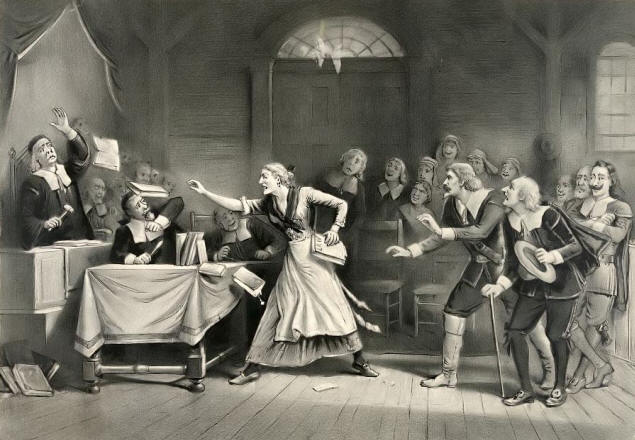
How Not to Hunt Witches

For the record, this will be the one and only time I will defend the minority's and my actions with respect to the Pacific Northwest Presbytery and Rev. Peter Leithart. Whatever may be said about us subsequently I will just ignore.

PCA Federal Visionist Mark Horne has publically characterized our actions as "a witch hunt." Allow me to set the record straight.

The PCA's 34th General Assembly formed a Federal Vision study committee, which reported its findings to the 35th General Assembly a couple summers ago. Leithart, on the day that the report was received, correctly complied with the report's recommendations by publishing on his blog an open letter to the clerk of the Pacific Northwest Presbytery, Rob Rayburn, in which he gave his thoughts on each of the nine declarations of the report, saying that he would cheerfully submit to a presbytery enquiry. I drafted a motion some months later, which Peter himself agreed to sign, which requested that the Pacific Northwest Presbytery do precisely what Peter asked to be done, i.e., examine his views in the light of the FV report. I was appointed to this committee along with three other ministers and three elders. Before the committee was appointed, Peter was asked which names he would like to be included. His response was that he was very comfortable with the seven of us being the ones tasked with studying his views.

The fact that this committee, which was my idea, came out four-to-three against me should be evidence enough against any foul play or deck-stacking on my part, as should the fact that the motion to form the committee was submitted by both Leithart and me.

Furthermore, the genius of presbyterial church government is that there is an appellate process designed to allow decisions of lower courts to be reviewed by higher ones. If in civil law we don't question one's patriotism for filing an appeal, why, when the same thing is done in the spiritual kingdom, should we question the person's churchmanship?

Lastly, the vows that all PCA ministers have taken include this one: "Do you promise to be zealous and faithful in maintaining the truths of the Gospel and the purity and peace of the Church, whatever persecution or opposition may arise unto you on that account?"

If Rev. Leithart is in error (which is the real issue, not the false dilemmas and red herrings debated on the floor of presbytery yesterday), then surely it would fall within the jurisdiction of this vow to seek to have those errors corrected, would it not?

But calling it a witch hunt? That is the kind of charge that barely deserves the ten minutes it took to write this post.

Friday, October 03, 2008

More on the PNW Presbytery's Leithart Debate

I promised an update on today’s presbytery proceedings, so here goes (and I’d be happy to answer further questions if you have them).

Before I do, however, I would like to say that I have great respect for Peter Leithart and consider him a sincere brother in Christ. He has demonstrated nothing but humble patience and forthrightness during this process, for which he is to be commended.

As acting chairman of the study committee, I first moved the recommendations of the Majority Report and then immediately presented a substitute motion consisting of the Minority Report’s recommendations. I then spent about 30 minutes presenting the findings of the Minority Report, which highlighted six areas in which the minority of the committee felt Leithart to be out of accord with the system of doctrine contained in our Standards. These areas concerned: (1) the covenant of works, (2) baptismal efficacy, (3) the imputation of Christ’s obedience, (4) the relationship of justification to sanctification, (5) union with Christ, and (6) final justification.

The case I was attempting to make was that the threads of Leithart’s deviations on these core doctrines, when woven together, form a single cloth that is not recognizably Reformed (see the Minority Report for details). In other words, this is not a matter of a mere slip of the pen or the use of infelicitous language, but a very consistent system of doctrine that bears little resemblance to what is taught in the Standards to which Leithart has vowed submission.

The response of the majority, given by Rob Rayburn, was that if the PCA proceeds to squash theological innovation and refuses to allow the Bible to take precedence over our Confession when the two are in opposition, then we will lose our vitality and relevance as a church and run the risk of sinking into ever-increasing obscurity. Furthermore, Rayburn's contention is that unless Leithart admits to explicitly denying what the Standards affirm, or explicitly affirming what they deny, then there can be no basis for finding him out of accord with the Standards on the matters in question.

From where I sat there wasn’t much by way of substantive response to the case that the minority made. The real concern on the part of the presbyters who spoke in favor of Leithart was that we not become overly narrow and that we do not discourage bold, pioneering theology.

The next step will be for some of us to formally complain against the presbytery, which, we expect, the presbytery will dismiss at our January meeting. If/when that happens, our complaint will go to the General Assembly level.

Continued prayers are asked for all involved.

Pacific Northwest Presbytery Overwhelmingly Approves Peter Leithart

Well, the vote was taken about an hour ago, and the Minority Report which I drafted was roundly defeated, meaning that the Pacific Northwest Presbytery has overwhelmingly determined that Peter Leithart's theology is indeed within the bounds of Reformed confessional orthodoxy.

Though the tenor of the three-hour debate was cordial, the level of discourse was rather disappointing in my view.

I will update in detail later tonight.

Peter Leithart and the Pacific Northwest Presbytery

For those of you who have been following the Federal Vision controversy in the PCA, I would ask for your prayers on Friday (today) from 10 am to noon PST, during which the Pacific Northwest Presbytery will be discussing the study committee’s reports concerning the theology of Peter Leithart.

The study committee was composed of seven men (four ministers [including me] and three elders). The majority report was signed by four men and concluded that Leithart’s views do indeed fall within the bounds of confessional Reformed theology, while the minority report, authored by yours truly, concluded that he falls outside the pale. Presbytery will act on the reports one way or another on Friday, and I will attempt to post an update when I can. In the meantime, please pray that God’s will would be done.

Thursday, March 06, 2008

Overthrow at the End of the Ages?

Let's get back to some theology, shall we?

There has been a good discussion over at Green Baggins about the nature of apostasy under the New Covenant. As you may know, our friends in the Federal Vision love to appeal to Paul's warning in I Corinthians 10 to demonstrate that the Old and New Covenants are virtually the same with respect to our experience of divine grace and the ability to resist temptation.

To the text....

What I find interesting is that, after telling his readers that Israel's "overthrow" in the wilderness is "written down for their instruction," Paul reminds the Corinthians that it is upon them that "the ends of the ages have come" (v. 11). He then warns them against haughtiness, after which he assures them that God will be faithful to his promises to them, not allowing them to be tempted beyond their ability, but with every temptation will provide a means of escape (v. 13). Then in vv. 14ff he starts talking about the Lord's Supper.

Hmmm....

There are passages in which Paul highlights continuity exclusively, and there are passages in which he focuses strictly upon discontinuity, but this is one of those texts where he expresses both (with the weight toward the former, to be sure).

But even here, where he draws an analogy between Israel's overthrow and our temptations, the apostle cannot resist mentioning that we are set apart from those who went before us in that the Spirit of the risen Christ has descended upon the New Covenant people of God and has served as a "Helper" in the midst of temptation.

My point is that we can no more easily draw a line straight from the Old Covenant community to ourselves than we can assume, without proving, that the only difference between the subject of Romans 7 and that of Romans 8 is his mood, disposition, or degree of covenant faithfulness.

Wednesday, January 30, 2008

The Right Error to be Wrongly Charged With

After expounding in glorious detail the gospel of justification by faith through the imputation to sinners of an alien righteousness, Paul the apostle begins the sixth chapter of Romans with the question, "What then? Shall we continue in sin that grace may abound?"

It seems to me that one of the key ways whereby we can determine whether we've understood one of Paul's arguments is by whether or not we are tempted to ask the question that he anticipates his readers asking.

So if, after reading the first five chapters of Romans, your first thought is that you can sin as much as you like since God's grace is so abundant, you're on the right track.

I know, I know... Paul's answer to the question is "no," but that doesn't change the fact that it's precisely the right question to ask.

The case can be made, therefore, that if Paul was constantly charged with preaching antinomianism (cf. Rom. 2:8), then this same charge will be made against those who preach a Pauline gospel today.

The question arises, then, concerning those in our circles who are sympathetic to the theology of the Federal Vision: In your zeal to remedy antinomianism, are you in fact undermining justification by faith alone? And if not, why do your critics all seem to think you are?

And what's more, Does it concern you that you are being charged with the exact opposite error with which Paul was charged?

Sunday, January 27, 2008

I Knew It!

Many Reformed confessionalists have long suspected that our Federal Vision friends are guilty of smuggling the covenant of works in through the back door by their rejection of the law/gospel distinction in favor of "covenant faithfulness."

Now we have proof....

Federal Visionist and PCA pastor Mark Horne wrote, in response to yours truly, the following:

"And for the record, there simply is no invective strong enough to describe the crimes of Westminster West against the Bible and the Reformed Faith" (comment #87).
Let the reader note that this was written after FV Godfather James Jordan did a pretty good job of calling down imprecations against Reformed orthodoxy when he spoke of the PCA's Federal Vision study committee as "a pack of liars... so openly wicked and evil, and so totally tyrannical, that is makes the Papacy look like small potatoes by comparison," R.C. Sproul as a "clown," and the PCA more broadly as a "gaggle of fools."

So there you have it. Curse-sanctions do have a role to play this side of the cross and empty tomb after all.

They are to be invoked against Westminster Seminary California.

***

Update: If you are tempted to comment about the precise nature of the Mosaic curse-sanctions or the definition of "invective," please refrain (for that is not the point of my post). Plus, you may want to re-read the verse about straining out a gnat while swallowing a camel.

Sunday, November 04, 2007

On Narrow Confessions and Broad Catholicity

It has been suggested in the comments under the previous post that our Federal Visionist brethren, since they borrow from a host of different traditions, are the least individualist and schmismatic people in the entire Reformed world.

But if early twentieth-century liberalism and late twentieth-century evangelicalism (or "evangeliberalism" for those of you who like combining stuff) have taught us anything, it is that having a "least-common denominator" approach to church is a bad idea, for if the prize goes to the folks with the most catholicity and fewest distinctives, then we can always find more fat to trim off to win it.

I'll see your total depravity and raise you the deity of Christ....

For my own part, I'd rather enjoy a spiritual, grassroots unity with all believers, while maintaining institutional and churchly unity with those who hold to the confessions of my church. And as for those who deny the gospel, well, I don't feel the need to have any unity with them at all (at least not in the kingdom of Christ, but if they want to sit down and talk about the Kobe/Shaq Lakers or when U2's last great album was released, I'll buy the ale).

But if we exalt the intangible and noncorporeal kind of unity to the exclusion of the unity that is embodied in actual traditions (you know, the kind with borders that define who they are), then whatever else we may call ourselves, we will have to add "Gnostic" to the top of the list.

So yes, like our "postmodern" emergent friends, the fellas in the Federal Vision camp love to pick and choose from various Christian traditions and weave it all into an interesting cloth. But like all those throughout modernity, the filter through which these various elements must pass is still the autonomous individual.

Maybe the biblicist apple doesn't fall far from the Kartesian tree after all....