Showing posts with label Politics. Show all posts

Sunday, January 31, 2010

Christ, Kingdom, and Culture, Part 3: VanDrunen

Continuing our reflections on Westminster Seminary’s annual conference on the topic of Christ, Kingdom, and Culture, the third lecture, titled “Christ and the State,” was given by David VanDrunen.

VanDrunen made a great point about how that we must be careful not to equate the civil kingdom with the state and thereby collapse into the state all other civil endeavors or concerns. States can be oppressive and tyrannical, he argued, and there needs to be a sufficient decentralization of power in order to guarantee some sovereignty to things like education and the arts.

One point that VanDrunen was careful to make was that the state, though a post-fall phenomenon, is nonetheless a legitimate institution and sword-wielder. Quoting Calvin, he insisted that “tyranny is better than anarchy.” (Just a quibble, but I am not convinced of how helpful this point is, since the term “anarchism,” when used today, inevitably evokes the idea of chaos while ignoring its political and economic definition, which is basically synonymous with “libertarianism” or “socialism,” properly understood.)

The issue of civil disobedience also came up. VanDrunen argues that it is never proper for a believer to seek to fight against religious persecution by means of the carnal weaponry of the state or its courts. If memory serves, he believes the same rules apply in the civil realm as well, meaning that it any form of civil disobedience to lawfully ordained magistrates is wrong, unless they compel us to disobey God’s law.

To tip my hat to the just-deceased Howard Zinn, I would respectfully disagree here. While I do think a Christian should never resist religious persecution but rather endure it as an example of Christ-like cross-bearing, I do think it’s legitimate for the believer to fight against injustices that arise for non-religious reasons (such as during the civil rights movement), as long as such resistance (1) is non-violent, and (2) doesn’t violate the Westminster Confession and invoke our spiritual liberty as a reason to resist civil oppression (I wrote about this topic here, here, and here).

OK, discuss away....

Monday, May 18, 2009

Think More, and Harder

There is a distinction that needs to be made when discussing the relationship of religion and politics, but for some reason, very few people seem to recognize it. So here goes (and please pay attention):

There is a difference between a moral principle and the implementation of a moral principle.

In other words, just because a handful of people agree on some point of ethics, that is not to say that they will all agree on what to do next. For example, two people may agree that abortion is wrong (a sentiment I share), but that part's easy. The hard part comes when we get to the "therefore...." Should it be made illegal? If so, by whom, the federal government or the states? What about the economic factors that often contribute to abortion, should we address them, too? What happens when a person thinks that one presidential candidate is against abortion but favors an economic policy that could actually further it, while another candidate is in favor of abortion remaining legal, but promises to address and help eliminate the factors that may lead to abortions?

My point? Simply that it's one thing to have a moral opinion, but the real thinking hasn't started yet.

Take the death penalty. Plenty of Christians believe that capital punishment is biblical, but also feel that it is unjustly administered in the United States. What then? Or what about gay marriage? Is there a legitimate distinction between saying that homosexuality is immoral and saying that the government should enact laws that keep gays from getting married? If not, then are we saying that every immoral practice should be criminalized by the state?

Or what happens when one's pro-life principles force him to choose between voting to outlaw murder in one arena but condone it in another? And even if the murder that happens in one arena (say, abortion) is far more widespread than that which takes place in another (like war), is there still room to weigh the practical chances of eliminating the greater versus eliminating the former, and actually play the odds and vote contrarily to one's preferences?

I don't think there are any easy answers to these questions, and therefore I will not pretend to provide them. All I'm asking for is that, amid our pulpit-pounding and rally cries to one cause or another, we take the time to think a little harder than we are accustomed to doing.

Especially before calling our opponent's faith or character into question.

Saturday, May 16, 2009

Americans Choose Life?

I just came across an interesting article, here's a snippet:

NEW YORK - The Gallup Poll reported Friday that 51 percent of Americans now call themselves "pro-life" rather than "pro-choice" on the issue of abortion, the first time a majority gave that answer in the 15 years that Gallup has asked the question.

The findings, obtained in an annual survey on values and beliefs conducted May 7-10, marked a significant shift from a year ago. A year ago, 50 percent said they were pro-choice and 44 percent pro-life — in the new poll, 42 percent said they were pro-choice.
I must admit, this really surprises me. I wonder what accounts for the shift?

Monday, May 11, 2009

Pope Versus Hope

I have one of those MSNBC news-ticker things on my PC gadget bar (a sentence, by the way, that none of us would have been able to decipher a decade ago), and this headline caught my eye: Archbishop: Obama Advances Anti-Life Agenda. The story continues:

WASHINGTON - A powerful Catholic leader on Friday accused President Barack Obama of pushing an anti-life, anti-family agenda and called Notre Dame's invitation for him to speak scandalous.

Archbishop Raymond Burke, the first American to lead the Vatican supreme court, said Catholic universities should not give a platform, let alone honor, "those who teach and act publicly against the moral law."
Now, under a one-kingdom framework I can totally see how hopelessly at-a-loss the American Christian must be when it comes to navigating these this-worldly waters. After all, there’s no question that Archbishop Burke’s charge is correct—President Obama is unapologetically pro-choice, espousing a position on the abortion issue that is inescapably at odds with the Christian religion. What’s a believing American to do?

Well, distinguishing heaven from earth is a good place to start.

You see, there’s nothing particularly new about this dilemma we find ourselves in. Paul urged the Romans to submit to the civil magistrate, even calling the secular rulers of his own day “servants of God” ordained to bear the sword (13:1ff, and that was when Nero was in power, someone who makes Obama look like Tinkerbell). Moreover, Peter instructs his readers to “submit yourselves to every human institution,” even mentioning the “emperor as supreme” (I Pet. 2:13). Like it or not, Barack Obama is the leader that God has chosen to govern the United States, for he exalts and demotes whomever he sees fit, and none of us are allowed to question his wisdom on such matters (Dan. 4:35).

Given what is said above, we must be willing to differentiate between the civil and spiritual kingdoms if we ever hope to live as God’s faithful servants in this present age. President Obama’s job is not to inaugurate Christ’s kingdom or further its interests, that job falls to the ministers of Jesus’ Church. And likewise, it is not my job as a minister of the Word and Sacraments to meddle in civil affairs.

Of course, the abortion issue is not merely a political matter, but a moral one, too, and there is certainly no rule that prohibits concerned citizens (even believing ones) from making sure their voice is heard. In fact, I would argue that engaging in civil and secular matters is a logical outcome of a strong two-kingdoms theology (if, of course, one is prone to such things, but I also wouldn’t want to begrudge anyone his political cynicism and resultant sloth, either).

But saying that we oughtn’t even honor our president because he is anti-life on the abortion question? That seems to be taking matters too far, especially for a Reformation Christian.

Saturday, February 14, 2009

Shall We Take Obama's Will for a Canon?

I came across this passage yesterday in Kenneth Whitehead's One, Holy, Catholic, and Apostolic:

St. Athanasius described how the Arianizing Emperor Constantius, in 355, dealt with a group of recalcitrant bishops at a local meeting in Milan. These bishops were refusing to sign a condemnation of Athanasius and "to communicate with the heretics. And when they in astonishment at this strange order said that there was no ecclesiastical canon for it, he instantly retorted: 'Take my will for a canon! ... Either obey or go yourselves into exile!'" (St. Athanasius, History of the Arians, 33).

In the course of nearly a half century during which he never wavered in defense of the doctrinal teaching of Nicaea, the great Athanasius regularly fought attempts by the imperial power and by bishops allied with it who sought to dictate Church decisions on the basis of considerations other than the traditional faith that had been handed down from the apostles.
Call me a cynic, but I can't help but wonder about the naivete on the part of those who desire the civil magistrate to be a protector of orthodoxy and guarantor of proper worship in the churches under his jurisdiction. Think about it: Whose orthodoxy would the magistrate enforce? Catholic? Pentecostal? Reformed? And according to whose understanding would the powers that be seek to ensure worship with reverence and awe?

It seems to me that in order to live up to the desires of our Reformed theocratic forebears we must banish all religious freedom so that we all worship and think according to what President Obama deems appropriate.

The collective shudder I just felt indicates to me that this whole ideal is more about power than it is about guaranteeing doctrinal and liturgical orthodoxy. If "our guy" wins the White House then sure, we'll let him call the ecclesiastical shots. But if, as is almost always the case, the president doesn't have a clue about religious matters, then why would we want to anything but escape the trappings of our theocratic ancestors?
.
After all, it is now, in a religiously pluralistic context, that our forefathers' two-kingdoms sentiments can actually be taken out for a spin to see how they handle.

Thursday, December 18, 2008

When Pinkos and Rainbows Collide

From Democracy Now:

Meanwhile, Obama is drawing criticism from gay and lesbian activists for his choice to deliver the invocation at next month’s inauguration. Obama has selected the Reverend Rick Warren, a leading evangelical opponent of abortion and same-sex marriage. Warren supported California’s recent gay marriage ban and has compared abortion to the Nazi Holocaust. He’s also backed the idea of assassinating US foes, including Iranian President Mahmoud Ahmadinejad. In a letter to Obama, Joe Solmonese of the Human Rights Campaign said, “Your invitation to Reverend Rick Warren to deliver the invocation at your inauguration is a genuine blow to LGBT Americans.”

Wow, it sure is scary having such a pinko-progressive president, innit? With "liberals" like this, who needs conservatives?

Monday, December 15, 2008

What Hath Washington To Do With Northhampton (Or Bush With Westminster)?

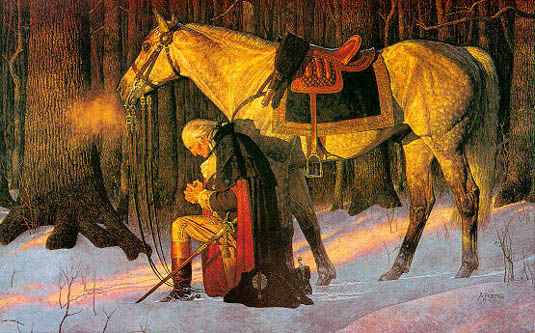
In a back issue of Modern Reformation magazine, D.G. Hart reviewed two recent biographies of George Washington (George Washington’s Sacred Fire by Peter A. Lillback and Washington's God: Religion, Liberty, and the Father of Our Country by Michael Novak and Jana Novak). Hart pointed out a bit of irony that a cynical Gen-Xer like me can really appreciate. After remarking that “Washington's conventional Anglicanism is the main reason for Lillback and the Novaks' joint conclusion that our first president was not a deist,” Hart says:

The effort to recover the orthodox Christian Washington has a remarkable unintended consequence…. In building a case for his exceptional character and integrity, [both authors] mention that “it would be a happy event if all presidents conducted themselves, to at least the extent that Washington did, as good Christians ... in private and in public.”
The argument of Lillback and Novak, then, is that Washington’s devout Anglicanism demonstrates the important and beneficial role his Christianity played in shaping his presidency. Yet there’s a problem.
But in recovering a place for orthodox Anglicanism in the formation of the United States, these authors have also unwittingly undermined the heart religion promoted during the revivals of the eighteenth century that continue to set the pace for American Protestantism. For if Washington's faith was sufficient to pass the litmus tests of orthodoxy and sincerity, then the extra credit demanded by revivalists that believers not simply believe but demonstrate faith visibly in their daily lives was unnecessary. In other words, if Founding Father’s faith was truly Christian, then revivalism’s criteria for true holiness was excessive. Proponents of the Religious Right have rarely seen that to have a Christian George Washington is to ignore an enthusiastic Jonathan Edwards, or that to retain born-again Christianity is to abandon the religion of the founding generation of American statesmen. This is the unintended benefit of these books, an outcome that shows again the curiosities that result from mixing politics and religion.
Darryl is absolutely spot-on here. The Religious Right can’t have its cake and eat it too, for if George Washington exhibited true Christianity then Jonathan Edwards was a fanatic, but on the other hand, if Jonathan Edwards described true Christianity then George Washington was merely one of those cold, dead, unconverted pretenders that Whitefield and Tennant made careers out of denouncing.
*
We see a similar trend in our own day, albeit in the opposite direction. Confessional Reformed types will argue until they’re blue in the face (or red, to be more precise) about the benefits of having a Christian president like George W. Bush, while at the same time their own confessions describe a Christianity that is churchly and covenantal, and that is characterized by such doctrines as infant baptism, Sabbath keeping, and a high view of the work of Christ (things which President Bush shows little sign of esteeming).

And to add to the irony, the same people who will go to the mat to prove the sanctified status of Washington’s soul stood vehemently against Barack Obama and overwhelmingly favored John McCain, though the latter clearly disliked the Christian Right and the former is a devout church-goer.

Maybe the fact of the matter is that we just like who we like, but we are too incapable of arguing for good earthly policies on their own terms that we need to find biblical justification for every extra-biblical preference we have. If we would only recognize two distinct but legitimate kingdoms, we could save ourselves the hassle of joining together what God hath put asunder.

Saturday, December 13, 2008

Hide It Under a Bushel? Yes!

In a recent interview, President Bush tipped his hand a bit with respect to his own faith in God and understanding of the Bible. When asked whether he believed that the Bible is literally true, he replied, “You know. Probably not.... No, I'm not a literalist, but I think you can learn a lot from it, but I do think that the New Testament for example is ... has got ... You know, the important lesson is ‘God sent a son.’”

Umm, why do American evangelicals insist on demanding that our president be Christian again? No, seriously: why? For eight years we heard how devout our leader was, how he was convinced that God had chosen him to lead the people into blessing, how God told him to invade Iraq, et cetera. But from the portions of the interview that I have read it does not appear that President Bush has a clear grasp of what the gospel even is. “The important lesson of the New Testament is that God sent a son”? How is that a lesson in the first place? What moral truism is our president’s “favorite philosopher” trying to teach us here? That we, too, should “send our sons”? Maybe to Baghdad?

And the reality is that John McCain was about forty rungs below Bush on the whole Christianity ladder (I don’t recall him mentioning his faith once during his campaign). And for my own part I don’t fault him for this at all, but would prefer our elected officials tout their experience, their grasp of the issues, and their actual policies instead of their faith.

Especially when their faith is in a God who sent his Son to teach us a lesson (one that we probably could have learned from William Bennett’s Book of Virtues).

Monday, November 03, 2008

Navigating the Complexities of Civil Terrain

As we head to the polls on Tuesday, I’d like to draw our attention to some points brought forth by author Jim Wallis. Before I do, though, I need to make the disclaimer that I personally am uncomfortable with his “God’s Politics” language, and I also think it can be anachronistic to seek answers to specific contemporary political issues in the pages of Holy Writ. Still, I think he offers some valid challenges for those who think (somewhat simplistically) that certain hot-button issues make our choice one between good and evil, with one guy wearing the white hat and the other wearing the black one.

First, with all that the Bible says about poverty, it is fitting to “examine the record, plans, policies, and promises made by the candidates on what they will do to overcome the scandal of extreme global poverty and the shame of such unnecessary domestic poverty in the richest nation in the world.”

Second, given the eschatological hope that we will one day beat our swords into plowshares, it is prudent to “choose the candidates who will be least likely to lead us into more disastrous wars and find better ways to resolve the inevitable conflicts in the world and make us all safer.”

Third, a consistent ethic of life is crucial, which includes “addressing all the threats to human life and dignity that we face — not just one. 30,000 children dying globally each day of preventable hunger and disease is a life issue. The genocide in Darfur is a life issue. Health care is a life issue. War is a life issue. The death penalty is a life issue.” Concerning abortion, Wallis adds: “I will choose candidates who have the best chance to pursue the practical and proven policies which could dramatically reduce the number of abortions in America and therefore save precious unborn lives, rather than those who simply repeat the polarized legal debates and ‘pro-choice’ and ‘pro-life’ mantras from either side.”

Fourth, given the issues of pollution and climate change, it is prudent to choose candidates who will “likely be most faithful in our care of the environment… And that choice could accomplish other key moral priorities like the redemption of a dangerous foreign policy built on Middle East oil dependence….”

Fifth, given the fact that all people are made in God’s image and retain human dignity, Wallis says that “torture is completely morally unacceptable, under any circumstances, and I will choose the candidates who are most committed to reversing American policy on the treatment of prisoners.”

Lastly, we ought to affirm family values and choose candidates who will “promise to really deal with the enormous economic and cultural pressures that have made parenting such a ‘countercultural activity’ in America today, rather than those who merely scapegoat gay people for the serious problems of heterosexual family breakdown.”

As we consider these issues, however we end up voting, may we seriously reckon with the difficulties involved in navigating the terrain of the kingdom of man, living as we do in this present age, albeit with one foot in the future.

Friday, October 31, 2008

Bruce Springsteen Concert Totally Changes Area Man's Mind About Voting

PHILADELPHIA—A recent Bruce Springsteen free acoustic set on Philadelphia's Ben Franklin Parkway completely changed the mind of sales associate Grant Garlock regarding the basic democratic process of voting, sources reported Monday. "It hadn't really occurred to me until Bruce said it, but when you think about it, voting really is the most important right we have as Americans," said Garlock, 38, who for various reasons ranging from scheduling mishaps to pure apathy has not voted in a local, state, or national election since 1988. "I used to think that my vote didn't count, but now I realize the Boss was right when he said, 'Every vote counts.'" On Nov. 4, Garlock plans to vote for John McCain because he thinks Sarah Palin is hot.

(From The Onion)

Monday, October 27, 2008

The Politics of Fear

Ever since issuing its "88 Reasons For '88" enumerating all the reasons why Jesus would return 20 years ago, I, along with all thinking Americans, have let out a loud "Ssshhh!!!" whenever evangelicalism has its collective ear to the ground. Like with E.F. Hutton, when the evangelical movement talks, people should listen.

To hear the latest prognostications, we need look no further than Focus on the Family's "Letter From 2012 in Obama's America." If the Illinois senator is elected, we are told, we have the following events to look forward to: (1) The Boy Scouts will disband rather than being forced to let gay scout masters sleep in the same tents with young boys; (2) Not only "government schools" but private Christian schools will be forced to teach homosexuality as an alternative lifestyle; (3) In 2011 there will cease to be any Protestant or Catholic adoption agencies in the U.S. because they will refuse to place children in homosexual homes; (4) In 2009 Obama will force the military to recruit gays; (5) Public schools will be forced to disallow praying during, before, or after school; (6) Schools will be forced to stop allowing churches to use their facilities; (7) In 2011 all FCC restrictions will be lifted allowing pornography to be shown on all TV channels at every hour of the day; (8) In May of 2010 Al-Qaeda will recapture Iraq because of the withdrawal of U.S. troops from the country; (9) Beginning in 2009 terrorists will detonate bombs in two small and two large U.S. cities, due in part to President Obama stopping the wiretapping of our phone lines; and (10) Nationalized health care will result in long lines for surgery and no access to hospitals for people over 80.
*
So there you have it, America: Vote Obama and, to tweak Pedro Sanchez's campaign slogan, "all your wildest nightmares will come true."

My point is not to contest the likelihood, the goodness, or the badness of any of these predictions. My only observation concerns just how frantic and nervous American evangelicals become when threatened with a diminishment of their power.

Employing such scare tactics may indeed rally the troops, we'll have to wait and see. But more serious than what these tactics communicate to the faithful is the message they send to the world, namely, that Christians are so in love with and invested in earth that we will not sit passively by and accept such a demonic agenda as one that offers free health care for everyone and tarnishes the nobility of all of our wars by letting openly gay soldiers fight in them.

But ask our faithful culture warriors what "justification" means, and prepare for glossed-over eyes and a blank stare....

Saturday, October 25, 2008

All the Evangelist's Men

Much has been said in the previous couple threads about the benefits of having a Christian president. Are there benefits to being represented by a believer, and if so, what are they?

On one level the question is irrelevant and impossible to answer. The reason for this is that America has never had an unbelieving president, so given the historical non-existence of the alternative, we just can't know how good we've had it all these years. I mean, if the only version of The Office you've seen in the American one, then you're in no position to judge whether it is better than the original British version (it's not).

Now I know what you're thinking: "Hold on a second! Are you honestly claiming that all of our presidents have been Christians?" Well, not exactly. But I am claiming that they have all made that claim. "But," you say, "don't you think they're just saying that to get elected?" Probably, at least in the case of some. But that's my point: I have no access to the Book of Life, let alone the jurisdiction over the hearts of all people who claim to trust in Jesus, so as far as I am concerned, the question is moot. Now if McCain or Obama wanted to join Exile Presbyterian Church, then I would do some prodding and render a judgment. But even then, it still often boils down to accepting a person's credible profession in the absence of evidence to the contrary.

"Aha!" you exclaim. "So you admit that we can judge the tree by its fruit." Well, yes, but that's not as easy as it sounds, especially for those of us who are not God. The fact of the matter is that both candidates will pursue policies that I, as a Christian, consider wrong. I can conclude from this that neither candidate is a Christian since they pursue what I consider to be non-Christian policies, but then I am elevating my own opinions about very complex matters to the level of "Thus saith the Lord." On the other hand, I can just reduce the whole election to one or two hot-button issues and decide things based on those. I realize that lots of people do this, and I don't want to begrudge anyone their right to be a one-issue voter.

A third option, however, is to admit that there are a host of issues involved in this election, all of which have some moral aspect to them, all of which are filtered through our theological premises, and most of which are not addressed directly in Scripture. Furthermore, the disagreements surrounding the really major issues are often not over morality (on which both sides often agree) but over factual matters. For example, a pro-choicer will rarely murder her two year-old because he costs too much to feed. This is because she thinks it is wrong to kill defenseless human persons. Then why does she think that a mother should have the right to an abortion? Well, for the same reason that you think you should have the right to have your appendix removed. In other words, the disagreement is not between one person who thinks that unjustified homicide is wrong and another who thinks it's right, but between one person who thinks that abortion is unjustified homicide and another who doesn't.

My point is simply that we need to tone down the sanctimony a smidge. This does not mean we should stop fighting against abortion or seeking to persuade others that the fetus is a real human person with a soul. But it does demand that we think more critically than to assume that the will of God will be served by the election of one candidate and thwarted by the election of the other.

Tuesday, October 21, 2008

The Tender Conscience of King Obamalech

Throughout this election season I have followed with interest the various discussions among Christians concerning the importance of electing a president whose morality is shaped by Scripture. If we vote for a non-believer, we are told, we are sacrificing morality on the altar of some idol or another.

I respectfully demur.

The underlying premise of this position is that pagans have no access to the basic ethical tenets that we believers share, and further, that these ethical norms derive solely from the Bible. To examine this position I will build upon David VanDrunen's argument in A Biblical Case for Natural Law (which I will not actually cite since I can't find my copy).

In Genesis 20 we read of Abraham journeying to Gerar. Fearing that his own life will be taken by the people of this pagan land on account of his wife Sarah's beauty, he lies to them and claims that she is his sister. This backfires, however, emboldening King Abimelech to take Sarah as his own wife. God immediately speaks to the king in a dream and informs him that Sarah is in fact Abraham's wife, and not his sister as he had claimed.

This is where the story gets interesting.

The next morning King Abimelech confronts Abraham and demands an explanation as to why he "brought on me and my kingdom a great sin." The patriarch's defense was the following: "I did it because I thought, 'There is no fear of God in this place.'" In other words, Abraham assumed that since he was in a pagan land with no relationship to the God of Israel or access to divine revelation that it must be the case that these people are unfamiliar with the fact that it is wrong to take another man's wife.

Some things to note in this account are: (1) Abraham's assumption was clearly false; (2) The "fear of God" did exist in the land of Gerar; and (3) King Abimelech recognized a "great sin" as some-thing "not to be done" and rebuked Abraham for almost causing him to fall into it.

Returning to the issue of the upcoming election, then, I would submit that the believer need have no fear that electing a non-Christian will immediately result in widespread immorality and rampant perversion. Natural law is a biblical doctrine, and the works of God's law are written on the hearts of all men.

Even (gasp!) Barack Obama.

Thursday, August 14, 2008

"No Justification Without Representation!"

I have a question for my Catholic Readers (with some preamble to set it up):

As I understand your position, the only hope for unity and genuine ecumenical progress is for us Protestants to return to Rome. The reason for this is that, according to you, the Reformation began with rebellion against lawful ecclesiastical power, and regardless of how long our subsequent history or how well-ordered our subsequent polity may be, there is no statute of limitations on apostasy. To put the matter simply, as long as the prodigal remains outside his father's house he is just that, a prodigal. Even if his pig-sty experience evolves into a great empire in which he becomes a mogul in the pork industry (even "the Sausage King of Chicago"), his success began with unlawful division, and this being the case, no amount of years can transform what is illegitimate into something legitimate.

My question, then, is this: What do you make of the United States of America? If the case can be made that the beginnings of this country were rooted in rebellion against lawful power (i.e., the Crown, an authority that, while not ecclesiastical but civil, is nonetheless divinely instituted), then it would seem to follow that, regardless of how many years transpire or how powerful we as a nation become, our only hope of gaining legitimacy would be by submitting ourselves once again to the United Kingdom against which we rebelled (over issues, I might add, much less important than those that compelled Luther and Calvin to break from Rome).

Since I honestly have no idea how tis question will be answered, I offer it merely in humble curiosity and not as some "knock-down, drag-out" zinger.

So what gives, Catholics? Are the rules different for civil power than they are for ecclesiastical, and if so, why? And if not, is not our Protestant nation even less legitimate than our Protestant churches?

Sunday, June 22, 2008

Speaking Prophetically to the Church

As much as I hate to disagree with my brother Lane Keister, I just can't help myself on this one.

In his recent post entitled How to Avoid a Recession, Lane argues that the way the government must respond to our current economic downturn is by cutting spending and cutting taxes. Now, when libertarian-type arguments begin to take this form, what is almost always meant by "cutting spending" is "cutting spending on programs that the poor benefit from." Characteristically Lane, like many Reformed limited-government advocates, lists such programs as public schooling, Social Security, and welfare as among those areas in which Big Brother has no business sticking his nose.

Maybe Lane's right (but I, for one, don't think this question is solved by an appeal to Romans 13). Still, if he were consistent he would have to include the military-industrial complex as an example of massive government spending of U.S. taxpayer dollars (around $626,000,000,000 in 2007).

But that aside, what irked me about Lane's post and subsequent comments was the idea that the church is to "speak prophetically" to the culture about its sin:

"It is very disappointing to me to see that the church is not seeking to be prophetic in its critique of the government. Should the church ignore sin when the church sees sin? I think not."
Now, what I almost never hear in these kinds of calls to speak prophetically to the state is any defense of what exactly the church, speaking as such, has the authority to tell the government to do or stop doing.

If we're to tell the state to stop overspending, does that include the hundreds of billions spent on the war? If we're to tell the state to enforce the Decalogue's moral demands, does that include covetousness and greed? If we're to tell the state to be tough on crime, does that include the kinds of crime wealthy white people commit?

Rather than speaking prophetically to the culture on earthly matters as a minister of the Word (a task I hardly feel competent to do), I would rather just do what my presbytery actually ordained me to do: to speak prophetically to my church, giving them the law, the gospel, the bread, and the wine.

You know what they say about the Jack of All Trades....

Tuesday, February 26, 2008

Of Roses and Rifles, Crescents and Crosses

As was pointed out in the last thread, there is a stubborn insistence on the part of many American Christians that our nation's immunity to cultural Babylonianism inevitably results in our being the number one exporter of happiness to the rest of the planet. God uses this country, we are told, to be a providential source of blessing to the entire globe.

I cannot help but wonder if what we export is received in the same spirit in which it is allegedly given (I mean come on, those roses with which the Iraqis were supposed to greet our soldiers sure ended up looking a lot like rifles). Is it possible that others may not be particularly fond of the blessings we keep trying to give them?

Just because we say, really loudly and with lots of force, that we are just trying to help, doesn't always make it so. There is greater reason to believe that intense persecution by Muslim fundamentalists would be a blessing to the American church than there is for the idea that an American-style government and culture would be a blessing to the people of the third world. I mean, concerning the first scenario Jesus himself told us as much (Matt. 5:11-12), but that still doesn't make us actually desire it.

So maybe a healthy dose of national humility is called for, especially on the part of us Christians whose Bibles tell us that unchecked power, untold wealth, and greed euphemized as ambition, though as American as apple pie, are called in Scripture "the lust of the flesh, the lust of the eyes, and the pride of life" (I John 2:16).

If we don't want Islamo-fascist oppression here, and if they don't want our "free markets" over there, so what? Whether it comes dressed in camo and army boots, or in turbans and sandals, it's still Babylon.

And stamping it with a crescent or a cross won't change that....

Sunday, December 23, 2007

Romney and Blair: Nutters Both?

Well, after much speculation, it is now official: British Prime Minister Tony Blair has converted to Roman Catholicism.

As when Dr. Francis Beckwith abandoned his post as president of the Evangelical Theological Society for the greener pastures of Rome, my reaction is to yawn, and then wonder what's for dinner.

I will make a few observations, though.

First, anyone who thinks that the Christian world is still divided between Catholics and Protestants is stuck in the sixteenth century. The Anglicanism that Blair jettisoned, much like Beckwith's former evangelicalism, is more similar to Catholicism than most care to admit, for various reasons.

Secondly, when our focus shifts from doctrine to piety, confessional Reformed theology is much closer to the Vatican than to Saddleback.

Thirdly, as Mitt Romney has been arguing, the minutiae of one's theology, despite our insistence to the contrary, has little bearing on his or her discharging of public duties. The next time we ask whether one who believes he will become a god one day is fit to have access to "the button," we should then pause to inquire the same of someone who believes that the earth stopped rotating for a day so the Amorites could be slain in Gibeon (is it not written in the Book of Jashar?).

The article cited goes on to say that "The former prime minister told the BBC this year that he had avoided talking about his religious views while in office for about 10 years for fear of being labeled 'a nutter.'"

I'm speculating here, but I'll wager that if Romney is elected, American evangelical culture warriors will expect the Latter-Day Saint to hold his tongue about the whole "Jesus is Lucifer's brother" thing. But if President Huckabee shies away from publically affirming that Jesus walked out of a grave on Easter morning, he'll be stoned for denying such a reasonable proposition.

Wednesday, December 19, 2007

The Decentralization of All Power

Submitted by John Terranova (A.K.A. Johnny T)

Starting with a distinction between the sacred and the secular, I approach the question of government with the belief that both Christians and non-Christians have equal insight and wisdom concerning this realm. As a topic of general revelation, I tend to side-step questions about the divine intentions of government -- rather than trying to discover the "nature" of government, I think we are free to create what ever form of social organization we need to. Personally, the government that I like best is the government that does the best job of promoting peaceful coexistence with everybody (a sentiment I assume most people will share with me).

I think that Libertarian-Socialism offers some ideas that might help achieve this desired end. Basically, Libertarian-Socialism wants to decentralize power -- to diffuse power as much as possible. Classic Capitalist-Libertarianism shares this basic goal, but has failed to achieve it. Capitalist-Libertarianism stifles the centralization of State power, but it promotes the concentration of private power. Today, the largest multi-national corporations have more global power and influence than many countries. Just as unchecked State power can result in massive abuses, so unchecked private power can result in the same abuses -- power can be abused whether it is public or private.

Libertarianism tries to offer the individual as much personal freedom as possible. Capitalist-Libertarianism tends to judge personal freedoms in economic terms -- the more stuff people have, the more they can consume, the happier they are; it positions people as consumers, choosing our favorite brands in the market place.

Socialist-Libertarianism recognizes that people are more than consumers, and that in addition to certain economic needs, people also need free time, family and social interaction, quality of life, and quality of environment. Around 200 years of Capitalist experimentation demonstrates that concentrated private power reduces the quality of these non-economic aspects of our lives. Without labor laws, the free market creates extremely oppressive working conditions that dehumanize workers (examples include Victorian England, pre-labor law industrialized USA, and contemporary developing countries that expose their work forces to the Capitalist policies of the WTO, IMF and World Bank).

Libertarian Socialism seeks to protect individuals from oppressive public AND private power. To do this, the government would need to be strong and independent enough to resist private interests from hijacking public social structures. This strong government's role would be to ensure the public's freedom from both private and public institutions. The government would have the role of policing itself -- but since this creates problems of accountability, complete governmental transparency would be necessary. This transparency would allow for both public and private scrutiny of everything that takes place in the public domain.

Monday, December 17, 2007

Limited Government Defended

Submitted by Darryl Hart

In theory the two-kingdom position allows for any form of government, from monarchy to socialism conceivably. In practice though, many two-kingdom advocates like myself favor the American form of government which involves at its best constitutionalism, federalism, the separation of powers and limited government. Is there something inherently two-kingdom about this form of governance?

If you believe in the fallenness of man, and you don’t need to be a Christian to do so, then it follows that decentralizing power is a good thing. To consolidate power in one person, office, or government agency may and usually does result in abuse of power for unwholesome ends.

Historically, tyranny of the worst kind has resulted from unrestricted state power. Centralization of the state only makes such tyranny more efficient. Churches have suffered repeatedly from states without limited power. Efforts to make Puritans and Presbyterians conform to the Archbishop of Canterbury’s rule produced an anti-authoritarian streak in Anglo-American Calvinism. A similar logic lays behind the concerns of those who would try to protect the authority of parents to rear children according to their own convictions.

Churches and families are not the only sort of mediating structures that suffer when states control more areas of society than they should. Voluntary associations of all sorts, from newspapers to baseball leagues, would not exist if the state were to regulate all aspects of social life.

Limited government is counterintuitive to some because it requires trusting others to oversee their affairs. It also assumes that a measure of order will emerge from a decentralized polity. The economist, Friedrick Hayek, talked about spontaneous order arising from the seemingly disparate efforts of actors with much less authority of the state taking charge of specific segments of society. This was order from the bottom up rather than the top down. If one believes that the health of local communities is crucial to the health of a nation, then limited government is an important way to protect the prerogatives of towns, counties and regions.

The particular aspect of the two-kingdom doctrine that lends itself to limited government is the inherent recognition of two powers, the church and the state (the family is also in the mix). When you already have two authorities you automatically have some limits on each. Living with the idea of two different powers overseeing your life could well explain why 2k folks lean toward the state’s power being restricted. Its power is not the only game in town.

Friday, December 14, 2007

The View from the Other End of the Club

It has been pointed out, correctly I think, that the world looks very different depending on whether you have your boot on your enemy's neck, or he has his boot on yours. While power is a sought-after commodity, there is also something to be said for the clarity that comes from being on the receiving end of the club.

Returning to Mitt Romney's appeal to allow the common morality that he shares with all people of faith to trump whatever theological differences there may be between him and evangelicals, it must be pointed out that the appeal for tolerance of minority positions is not uncommon for minorities to make.

After all, does not history demonstrate that the rights of those outside the inner circle are never bequeathed from on high, but must be won through popular struggle? Power, whether political, social, or religious, is often clutched with great jealousy lest it be lost. So if you're a woman, an immigrant, or in Romney's case, a Mormon, the clarion call is for civil liberty and the right to be treated as equals in the public square.

The evangelical church (err, excuse me: movement) has not had the best track record in according said civil liberties to those who are demanding them. You see, as long as we are in power, we will use all the muscle we can muster to win the culture war and defeat the godless, feminist, socialist Ivy-Leaguers who would just as soon surrender the American Dream to those A-rabs in the Middle East.

Sure, we can't define justification by faith if given a hundred tries, but by God we're gonna keep those gays at bay if it kills us.

Let's hope that if our millennial dreams shatter like the tables of the Decalogue and we are unseated from the corridors of power, the new occupants will be kinder and gentler than we were.

But I'm not holding my breath.