Showing posts with label Worship. Show all posts

Sunday, February 07, 2010

Christ, Kingdom, and Culture, Part 4: Horton

The last lecture that we will be discussing from Westminster Seminary California’s annual conference, Christ, Kingdom, and Culture, will be Michael Horton’s, titled “Christ and the Workplace.”

What stood out most was his insistence (which he also highlighted last year, and which doesn’t have much to do with his actual topic) that “God doesn’t need your good works, your neighbor does” (which is a quote from Luther). Horton’s point is that, ironically, it is the believer whose church is a “full-service community” replete with ministries for every niche demographic under the sun who will be least equipped to love her neighbor. The reason for this is that when churches adopt an “every-member ministry” model, the result is that the people who come spend all their time ministering to other religious consumers—not just on Sunday but throughout the week—to the point of exhaustion. When you’re up to here in ministry to other church-goers, who has time to help a neighbor with a leaky roof?

On the other hand, when we have a proper understanding of the way a church’s ministry works—namely, that Jesus serves the people through his ministers (you know, the guys who wear the black gowns), and the people get ministered to—then the congregation will actually be empowered on the Lord’s Day rather than sapped of all strength. Then, lo and behold, they can go out and do their good works for those who actually need them, like their neighbors.

This is why at Exile Presbyterian Church the top line of our liturgy says, “The Divine Service.” Yes, there is service going on, but it’s Jesus serving his people, and not so much the other way around. After all, it is the righteousness based on law that is characterized by desperate and frenetic attempts to get God to notice us (think: prophets of Baal cutting themselves with stones), while the righteousness based on faith is content to receive first, so that it can give afterwards.

So the next time someone says something like, “Church isn’t supposed to be about getting from God, but giving to him,” you can respectfully demur, and say that Horton told you otherwise....

Monday, November 30, 2009

There's No "I" in Worship

I made a statement in my morning sermon yesterday that struck some people as unsettling, but I plan to stick by it unless I can be shown to be wrong:

Worship, according to the New Testament, is an almost exclusively corporate, rather than individual, phenomenon.

Take for example what is arguably the locus classicus on the topic of worship: Jesus’ interaction with the Samaritan woman in John 4 (in which the word “worship” is used no less than ten times). If we try to substitute the contemporary understanding of worship for what our Lord and the woman are talking about, the dialogue makes little sense. Worship, in the parlance of our times, usually refers either to singing songs specifically, or more generally to whatever goosebumpy, “Hallmark Moments” our private devotions happen to yield. But what Jew or Samaritan in antiquity, if they were in their right minds, would have argued that one’s personal quiet times needed to take place on a mountaintop either in Jerusalem or Samaria? The very fact that the initial argument between Jesus and the Samaritan woman focused on the where of worship demonstrates that it was not private devotions that were being discussed since, as everyone knows, those can take place anywhere.

Even the well-known passage Romans 12:1, in which Paul speaks of “our spiritual worship” cannot be taken to denote individual private worship. The apostle urges the Romans to offer their bodies (plural) as a living sacrifice (singular), and he then launches into a discussion of the one body and its many members, thus indicating that the Romans’ spiritual worship was that which they offered in covenantal assembly.

And then when we add all the “let us draw near” passages of Hebrews, we arrive at a picture of worship that is corporate, collective, and covenantal.

This is not deny the Reformed categories of individual, family, and corporate worship. But in our day and age, characterized as it is by the atomization of society, it is the corporate nature of worship that needs to be drilled into the heads and hearts of God’s people.

That’s all I’m saying….

Thursday, September 17, 2009

Who Was More Popular, "The Good Shepherd" or "The Walrus"?

The first section of Dual Citizens focuses on the corporate nature of the believer's life as a pilgrim caught in the overlap of the ages, with my attention being given primarily to the issue of the church's worship. Chapter 1 is called "Corporate Worship: Covenantal Assembly of a Peculiar People," and in it I state the chapter's aim thusly:

My aim in this chapter... is to call into question the American church’s desire to avoid the obscurity and lack of popular appeal with which Jesus Himself was seemingly plagued. In place of the flashy, high-octane wor­ship experience, I will commend faithful attendance on the simple means of grace that Christ has instituted for His people’s growth, unremarkable though they may be.
There's an interesting contrast (at least it's interesting to me) between John Lennon and Jesus that I draw the reader's attention to here. When Lennon made his famous proclamation in the mid-1960s that "The Beatles are more popular than Jesus," the American public went absolutely ballistic, with our displays of disapproval including public burnings of Beatles albums as well as crushing them with streamrollers. Freedom of religion was one thing, but questioning Jesus' popularity? That was a no-no.

But when you think about it, Lennon was kind of right, on one level anyway. The mourners who gathered at the vigil after his shooting far outnumbered the measly 120 that Jesus managed to attract (Acts 1:15).

The question I pose in this chapter concerns whether we as Christians are OK with following an unpopular Savior whose church is characterized by rather unremarkable means for growth and the edification of her members, means as mundane as the preaching of the Word and the administration of the sacraments. We Americans, driven as we are by a theology of glory, are so consumed with success (as defined by the culture) that we don't really know what to do with the fact that Jesus spent a good deal of his time asking his friends not to be embarrassed by him (Matt. 10:32-33; 26:34; Mark 8:38). Paul followed suit, pleading with his young protege not to be "ashamed of the testimony of Jesus, or of me, his prosoner" (II Tim. 1:8).

Hardly the kind of rousing rhetoric that rallies the rabble for revolution....

Our Lord made it clear that the servant is not greater than his master. If we want to follow Jesus (the real one, I mean), we simply have no other choice than to identify ourselves with his own unpopularity, together with what the world sees as the weak and beggarly elements of the church that he founded. Balking at such divine foolishness is noting short of shirking the cross, as if it was fine for Jesus to die on, but not us.

Sunday, May 03, 2009

Linguistic or Liturgical Intelligibility?

In his book The Lord’s Service, Jeff Meyers makes a great point about the difference between intelligibility and familiarity, and how that often a lack of the latter is confused with a lack of the former.

Why does this matter?

Well, in discussions about the need for contextualization in worship, the claim is often made that all that’s being argued for is that pastors be intelligible in their presentation of the gospel. "Just speak in a language that people can understand," we often hear. If we reply, "Oh, you mean English and not Farsi?", we begin to see by the answer given that intelligibility involves a lot more than it seems at first glance.

On top of linguistic intelligibility, there also seems to be the need for liturgical intelligibility, which is far more controversial an issue.

But here’s where Meyers’s distinction between intelligibility and familiarity becomes very helpful. If we’re honest we will admit that a visitor at our church, whether a believer or not, will be able to understand lots of practices and concepts with which he still may be unfamiliar. For example, there’s nothing inherent in the practice of kneeling during a confession of sin or raising hands during the singing of the Doxology that is unintelligible to everyday Americans. Assuming a normal level of intelligence, anyone can look at a group of people bowing and asking God for forgiveness and conclude, "Hmm, it seems that these people think they’ve done something wrong, and they want the God whom they think they’ve offended to pardon them." The same goes for the lifting of hands during the Doxology: sure, the words and melody may be new, but the posture and practice themselves are perfectly understandable, albeit unfamiliar.

So the question that arises (but is not "begged") is, Is it legitimate to alter the church’s forms of, or practices in, worship for the sake of those for whom they may seem odd, foreign, or irrelevant?

Tuesday, January 13, 2009

Preaching to the QIRE: Lewis on Liturgy

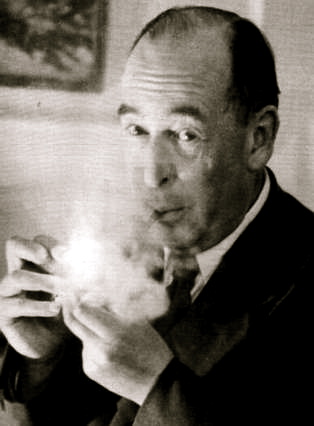
I came across this quote by C.S. Lewis in another book I’m reading. He is dealing with the essential nature of ritual and ceremony, highlighting the fact that many aspects of life—holidays for example—are marked off from the ordinary by means of special meals, special traditions, and special ceremonies. On “the language of a liturgy” Lewis writes:

Regular churchgoers are not surprised by the service--indeed, they know a good deal of it by rote; but it is a language apart…. [Liturgy] is a pattern imposed on the mere flux of our feelings by reason and will, which renders pleasures less fugitive and griefs more endurable, which hands over to the power of wise custom the task (to which the individual and his moods are so inadequate) of being festive or sober, gay or reverent, when we choose to be, and not at the bidding of chance.
When the church pursues what Scott Clark calls the QIRE, or, the quest for illegitimate religious experience, it places the believer in the impossible position of needing to achieve some level of spiritual feeling in order for his worship to pass as genuine and worth the hassle, all the while having no way of determining what that degree of experience is or measuring it once it has occurred.

But when we realize that we are inherently liturgical creatures (this, after all, is what separates our experience of birth, sex, and death from that of animals), then we will be free to embrace the structure of liturgy without being afraid that we will stifle the Spirit in the process. If the Spirit brought order to the original creation’s formlessness and void, is it not warranted that we understand him to bring order to the new creation as well?

Sunday, July 20, 2008

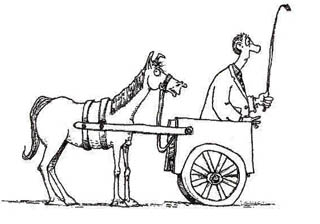
Of Style and Dogma, Carts and Horses

In Mark 7:1-23 we gain some subtle insight into the relationship between outward religious rituals (lex orandi) and the beliefs of those who practice them (lex credendi). After highlighting the extrabiblical nature of the Pharisees' demand that people scupulously wash themselves before eating bread (vv. 6-13), Jesus then gets to the heart of the matter:

And he called the people to him again and said to them, "Hear me, all of you, and understand: There is nothing outside a person that by going into him can defile him, but the things that come out of a person are what defile him" (vv. 14-16).
Why the abstract lesson on sin? Wasn't the issue supposed to be the amount of hygiene necessary to eat a sandwich?

Well if, as I have been arguing, a church's worship shapes its member's beliefs every bit as profoundly as its beliefs shape its worship, then Jesus' excursus on indwelling sin may not be as random as it initially appears.

You see, what certainly seems like a harmless religious ritual (ceremonially washing one's hands before eating) had clearly led to a deficient view of sin. In other words, the Pharisees' lex orandi (law of worship) had adversely affected their lex credendi (law of belief). Because they had for so many years been seeking to lessen their defilement by scrubbing their hands every few minutes, they had begun to think of defilement as primarily outward and circumstantial rather than inward and substantial.

Here's how this works in the church today: A church's leaders begin with the question, "What style of music should we have?" They decide that in order to reach the youth, they had better scrap the piano in favor of an acoustic guitar. They quickly realize that certain songs aren't easy to play on a guitar ("A Mighty Fortress"), while others are ("As the Deer"). Before long, the church's worship style (mellow acoustic music) defines its content (songs with a mellow acoustic feel). And then lo! and behold!, a movement is spawned that sees Jesus as that friendly guy at Woodstock with some real groovy spiritual insight.

But then, the Emergent Church has rescued us from the Jesus Movement, and I, for one, am thankful that none of these concerns can be applied to them....

Tuesday, July 15, 2008

Lex Orandi, Lex Credendi

Liturgical scholars often insist that a church's worship is a direct by-product of what they believe about God. If a particular congregation's leadership considers God to be a kind of magic genie whose job is to do our bidding, then their worship will most likely be narcissistic and consumer-driven. And conversely, if a church understands God to be the sovereign King of the universe, then an atmosphere of reverence and awe will prevail.

At least, so the theory goes.

Unfortunately, this is only half the story. As indicated by the historic slogan lex orandi, lex credendi (literally, "The rule of prayer influences the rule of belief"), the relationship between confession and worship, dogma and liturgy, cuts both ways. In other words, it's not simply the case that a church's worship is the result of her beliefs about God, but it is equally true that her beliefs about God are largely shaped by the way she worships.

History bears this out. Well before the church's Christology assumed its mature, Chalcedonian definition believers were already worshiping a God who subsisted in three divine Persons. Both Augustine and Prosper of Auquitatine appealed to the church's practice of infant baptism in order to refute the Pelagian heresy that children are born without original sin. They were saying, in effect, "If infants are innocent, then why have we been baptizing them all this time?" In Prosper's own words: "Legem credendi lex statuat supplicandi" ("Let the law of prayer establish the law of belief").

If it is true that worship shapes belief as significantly as belief shapes worship, then the ramifications are pretty serious for those churches—whether evangelical or Reformed—that insist on making style a leading factor in how they conduct divine worship. Whether their aim is to woo the unchurched or demonstrate their "relevance" to those coveted artsy-fartsy soul-patched bohemians, the ever-present danger is that Jesus will be transformed from Deus homo into some guyliner-wearing dude in an indy band hoping to land a record deal.

Luther was right, the church will sing its way into idolatry long before its dogmaticians join the party.

Thursday, November 23, 2006

Straining at a Gnat, Reformation-Style?

Two of our non-Reformed readers (one an Anglican, the other an evangelical) have recently questioned the deliberate and conscientious approach of Calvinists toward worship. They comment:
"Why do Presbtyerians have to make everything so confusing?"

"I just don't see how we make such a distinction between our individual and corporate Christianity.... Worship is not about this hill or that hill... it's about the spirit and truth...."
Are we, as we claim, seeking to offer God "acceptable worship, with reverence and awe," or is it in fact true that we are so painstaking in our attention to detail that we "strain at a gnat while swallowing a camel"?

The second comment from our evangelical brother is interesting, particularly because of the many things that are simply assumed without being proven (it can be read in its entirety toward the end of the A Call for Categories thread).

The first thing presupposed is an interpretation of "worship" in John 4 that is individual rather than corporate (which makes the conversation between Jesus and the Samaritan woman nonsensical). Furthermore, our brother assumes that Jesus' point about worship no longer being offered "on this or that hill" means that institutional religion's days are over (as if Reformed believers focus solely on "candles, instruments, songs, robes, dancing clowns, [and] waving flags," while evangelicals "try to stay so close to a rabbi named Jesus that [they're] coughing on the dust he kicks up with his feet").

It seems that our good ol' American, post-Enlightenment sensibilities have so eclipsed the world of Jesus and Paul that the individual has swallowed the Body, the the heart has prevailed over the head, and "Thus saith the Lord" has morphed into "Cogito, ergo sum."

Thursday, November 16, 2006

A Call For Categories

I've been arguing that John Frame's desire to broaden the Regulative Principle of Worship (RPW) to apply to "all of life" is only possible by watering down the its strictness in order to expand its jurisdiction (kinda like what evangelicalism does with Scripture in general).

For example, he writes:
"There are, of course, human activities for which there are no explicit biblical prescriptions. Scripture doesn’t tell us how to change a tire, for instance. But there are biblical commands that are relevant to tire changing, as to everything else.... When I change a tire, I should do it to the glory of God. The details I need to work out myself, but always in the framework of God’s broad commands concerning my motives and goals. Here too, worship is parallel with the rest of life."
The alert reader will surely have noticed that, for Frame, the RPW's regulating aspect (which used to say that all worship not expressly warranted by Scripture is prohibited) now functions more like a suggestion. Worship, according to Frame, is any activity that "glorifies God," and further, the church is free to do so according to some broad "biblical commands that are relevant" while "working out the details ourselves."

Frame then leaps categories from worship's elements to its circumstances and forms:
"In worship... there are some activities for which there are no explicit biblical prescriptions. Scripture does not tell us specifically when or where to meet for worship, or how many hymns to sing, or precisely what words to use in offering prayer. These decisions require the use of godly reasoning, guided by the general teachings of the Word (WCF 1.6). The parallel between worship and other areas of human life should not surprise us, because, in one sense, worship is all of life."
By blending the elements of worship which Scripture alone may regulate (prayer and singing), its circumstantial details (the number of hymns sung), and the forms the elements take (the particular words used during prayer), Frame has walked into a discussion that has been going on for hundreds of years, redefined its terms without bothering to tell anyone first, and then broadened its jurisdiction to the point of meaninglessness.

And we think the Mormons confuse categories when they insist that, since Jesus is the Father, he was a schizophrenic who talked to himself all the time....

Tuesday, November 14, 2006

Is All of Life Worship?

Although many believers in Methodist, Lutheran, and Anglican traditions might find the Reformed articulation of the Regulative Principle of Worship (whatever elements of public worship that are not biblically mandated are therefore prohibited) rather stifling, Professor John Frame sees the RPW as not being strict enough. He writes:
"But when you think about it, the regulative principle is not limited to worship services. It is God’s regulative principle for all areas of human life.... How do we find out how to glorify God in all of life? The same way we find out how to glorify God in worship: we consult His Word. So the sufficiency of Scripture is for all of life, not merely for one segment of it" (A Fresh Look at the Regulative Principle, 1).
So according to Frame, the RPW's jurisdiction should be expanded to cover "all of life" (from which "worship" shouldn’t be separated in the first place).

But as T. David Gordon has pointed out in response to Frame, the reason why the RPW was initially formulated was to answer the question about the limits of ecceliastical power (a question Frame fails to address):

"The issue was not... 'worship' versus 'the rest of life,' but those aspects of life governed by the church officers versus those aspects of life not governed by the church officers.... Frame's attempt to put 'all of life' under one umbrella... is doomed to futility, because it does not address the very issue the regulative principle was designed to address, the limits of church power and the liberty of conscience."
So here's my question: Ought we to distinguish between the sacred and the secular so as to limit the church's jurisdiction to what we may and may not do in worship? And if not, should we either A). Give the church's officers power to dictate all of life as strictly as they do worship, or B). Allow them to govern worship as loosely as they do all of life?

Sunday, November 12, 2006

The Regulative Principle of Worship

Who gets to determine how God is worshiped? Are we free to worship him in whatever manner we choose (provided we are sincere), or does he insist on prescribing the kind of worship he will accept?

Historically, the Calvinistic wing of the Reformation has argued for the latter position (whatever is not commanded is prohibited), while both the Lutheran and Anglican branches have taught the former view (whatever is not prohibited is allowed).

In the next day or so I hope to begin an extended interaction with John Frame's views on the Regulative Principle of Worship (RPW). Frame repudiates the distinction between "worship" and "all of life," arguing that it is inconsistent for believers to posit one rule governing one and a different standard regulating the other.

While I suspect that most of our readers will embrace the Reformed position, I know that there are some Episcopalian lurkers out there whom I'd be interested to hear from. And what about you evangelicals? What say you?

Wednesday, November 08, 2006

Traditional and Reformed: A Tautology?

To many, the description of a church’s worship as containing "traditional, Reformed liturgy" is a somewhat tautological and needless repetition of concepts (one which most likely originated in the Department of Redundancy Department).

But is it necessarily the case that the label "Reformed" inherently contains the concept of "traditional"? When I think of traditional Presbyterian worship, what comes immediately to mind are things like dark suits, pipe organs, schmaltzy hymns like "In the Garden," and hard pews with Ward, June, Wally, and the Beave sitting in them (Eddie and Lumpy are outside smoking cigarettes in the church parking lot).

Alas! The 1950s' may not have been the high water mark of American religion after all....

The worship at Exile Presbyterian Church is certainly liturgical and Reformed, but I don’t know if I’d call it traditional. I don’t wear a suit but a black Geneva gown, we celebrate Communion every week, and we sing both biblical psalms and hymns, some of whose tunes are from the third century with others having been written last year. Moreover, our liturgy is a bit more rich and robust than what one would usually associate with traditional Presbyterianism (we kneel for confession of sin, raise our hands during the Doxology, and have been known to sing some of our prayers).

So are we a traditional Presbyterian church after all, or just a Reformed one? Is this a distinction without a difference?

Thursday, May 04, 2006

Intelligibility or Familiarity?

A frequent objection from the missional crowd (by the way, who says they get to co-opt that word?) is that Reformed or traditional worship is "unintelligible" to non-believers.

Let's pause here and examine this charge for a moment.

Imagine the following scenario during a worship service: The pastor says something like, "Let us pray together and confess our sins and shortcomings to God," then everyone prays, and then the pastor says, "God is a loving and forigiving God, and if you confessed your sins to him, he forgives you for Jesus' sake."

For the life of me, I can't figure out what is so unintelligible about this! Assuming the non-Christians present actually speak English and have come across the words pray, sin, and God at some point in their lives, then I must conclude that they can at least figure out what's happening all around them: Christians sin, God doesn't like it, but when they confess it, he forgives them because he loves them.

Is it familiar to them? Certainly not! But unfamiliarity is not the same as unintelligibility.

But when you stop to think about it, Christian worship is unfamiliar to everyone before they become Christians (just like the culture of Bangkok is unfamiliar upon one's first visit). As with the entire Christian life, the longer we walk with Jesus and worship him, the more comfortable and familiar we become with him, his people, his Word, and his worship.

After all, if creating a church experience that is completely familiar to the non-believer is our goal, we'll have to ask ourselves, "But if our church is no different from what they get in the world, why would they bother to show up?"

Enter the Xboxes, the velcro walls, and whatever else will entertain the religious consumers.

Tuesday, May 02, 2006

Gimme That Ol' Time, Middle Eastern, Reformed Religion!

There are a couple objections on the part of the "contextualizers" that I'd like to address briefly in this post and the next.

The first is that churches with "traditional worship" (a phrase I hate) are simply replacing worship that would be relevant in this culture with worship that was relevant in the culture of Calvin's Geneva 500 years ago.

This is simply false.

As anyone who has studied the history of Christian worship will testify, in no sense whatsoever were the Reformers trying to reinvent the worship wheel. Rather, they were interested in going back to the earliest sources they could find in order to separate primitive Christian worship from its medieval Roman Catholic distortions and aberrations. As liturgical scholar Hughes Old has ably demonstrated in his Patristic Roots of Reformed Worship, the services in all the sixteenth-century Reformed churches were every bit as ancient to those people as they seem to us today. Reformed worship, therefore, is not white, Genevan, or Northern European.

In fact, the early church in the book of Acts worshiped according to the pattern of the Jewish synagogues, which was characterized by set patterns, liturgy, readings, and prayers. This means that the worship of Reformed churches in North America today is not only similar to that of Geneva, but to that of the early church fathers, the apostles, and the people of God during Old Testament times.

If you ask me, that's pretty good company....

Monday, May 01, 2006

Pop Culture, Folk Culture

What do the advocates of "contextualization" mean exactly by that term?

Yeah, yeah, I know: We're supposed to communicate in terms that the culture can actually understand. But everyone agrees with that (at least in theory). Beyond the obvious, though, what should churches do in order to be contextual?

It is here that a crucial distinction comes into play: pop vs. folk culture.

Many seem to presuppose that pop culture sets the terms of the discussion, and then the Christian church must conform. So, since Boomers in our culture want a relaxed worship experience in which they can hear Beach Boys style music surrounded by people in leis and hula skirts, we should give them that. After all, as long as the message is good, the form it takes doesn't matter, right? Welcome to Margaritaville Community Church!

But pop culture is a pretty recent concept (until the invention of analog tape and the subsequent ability to mass-market and mass-produce it, pop culture didn't have a leg to stand on).

Christianity, however, has always been a folk culture. We are a "peculiar people" with a calendar, language, and history that are unique and distinct from the world's (with some overlap, of course). So rather than asking, "How many X-Boxes will our children's ministry need to have a large, successful church?" we should be asking, "What, according to the Bible's folk culture, should our children's ministry look like?"

When we ask the right question, we find (to our contemporary culture's horror) that it is biblical for kids to worship together with their parents from as early an age possible, and that dividing the body of Christ by age or musical tastes is an incredibly American thing to do.

But isn't insisting that families forget their own personal tastes and worship together "irrelevant" in today's society?

Maybe. But when a society's popular culture is out of accord with the Bible's folk culture, it is the former, and not the latter, that is the truly irrelevant one.

Saturday, April 29, 2006

Missional Marxism?

With all the careful attention given to demographics research by cultural critics and missiologists alike, it seems, to me at least, that amid the myriad of categories we stick people into (Boomers, Gen-Xers, D.I.N.K.s, urban hipsters, Bobos, wealthy white suburbanites) we Christians have forgotten the most important demographic cultural label of all: Adamic.

According to the Bible, all people fall into one of two categories: "in Adam" or "in Christ."

This amazing (re)discovery ought to revolutionize our approach to outreach and evangelism. Not only will it save us countless hours that otherwise would have been spent calculating the effects of our PowerPoint presentations on Asian-Americans versus Anglo-Americans, it will help us streamline our approach by giving us an understanding of our target audience that is actually relevant.

You see, focussing on whether someone makes $25,000 a year and drives a Gremlin or $75,000 a year and drives an Audi is a very shallow way to treat people. As if our detailed analyses of the incomes and spending habits of the people we're trying to reach could really capture who they are (what are we, Marxists? Pretty soon we'll be calling the former the proletariat and the latter the bourgeoisie).

But when we move beyond the surfacy and superficial, we discover that all people -- black, white, rich, or poor -- have one common denominator that makes all their apparent differences pretty meaningless at the end of the day: They are in Adam, and their culture is Adamic.

(And if you think I'm painting with too broad a brush, go read Eph. 2:1-3; 4:17-19.)

Once we recognize this, we can spend less time trying to figure out which TV shows to integrate into our multimedia presentations ("Is The O.C. too white? Is The Shield too edgy?"), and we can spend more time dealing with the tainted presuppositions that our fallen hearers come in with every Sunday (such as: Jesus is supposed to give me a more fulfilling life, or, Church is supposed to meet all my needs). But unfortunately for our hearers, those are often our presuppositions too.

So I'm all for attention to demographics and contextualization, just as long as we focus on what really matters.