Monday, October 27, 2008
The Politics of Fear
Saturday, October 25, 2008
All the Evangelist's Men
Tuesday, October 21, 2008
The Tender Conscience of King Obamalech
Sunday, October 19, 2008
What Would Mary Magdalene Do?
Apart from Pentecost, ecclesial performance of this script could only be on the order of imitatio Christi, a hopeless series of attempts to re-create the original work or translate it into a contemporary idiom. Holding on to a few scraps of "sayings" (always ethical), we might focus all of our energies on answering the question, "What would Jesus do?" but then we would have no connection to what Jesus has done, is doing, and will do for the ungodly.
... the church's performance here and now is not "based on a true story," but is part of it: a living liturgy of covenantal action and response. It originates in the heart of the Father, unfolds in the life of the Son, and is brought to fruition by the graciously disruptive power of the Spirit.
This Spirit bridges the eschatological distance between the already-consummated Jesus history (the age to come) and our existence in the last days of this present age. Nevertheless, the church is part of that story always at a different place than its lead character. He is ahead of us, in the last act, yet is keeping our history moving toward him by his intercession and work of his Spirit.
Thursday, October 16, 2008
Coping with the Real Absence of Christ
When we refuse to collapse the resurrection, ascension, and Parousia into one event, a pneumatological space appears for the time between the times. The Spirit is the mediator of, not the surrogate for, Christ's person and work.... The Spirit's work both measures and mediates the eschatological difference between the head and his members.
When the Spirit is appealed to as merely the solution to the problem of Christ's absence, and not also as the one whose very presence constantly provokes our sense of the "more" of the Parousia, we are no longer speaking of the Spirit's mediation so much as the Spirit's replacement of Jesus Christ.
Tuesday, October 14, 2008
Borrowed Capital, Borrowed Liability
Continuing our look at Christianity in the public square, I'd like to direct our attention to Michael Horton's observation that:"Because non-Christians are still wired for law, they can build decent civilizations. And because Christ-ians are simultaneously saint and sinner, there is absolutely no guarantee that a 'Christian nation' will be any better than a pagan one. In fact, it may well be worse precisley because of false ex-pectations derived from bad theology" ("Church or Political Action Committee?" in Modern Reformation, October/November 2008).
Sunday, October 12, 2008
Grace Elevating Nature, Heaven Legitimizing Earth
"In its doctrine of creation, Rome ranges reality on a hierarchy of being. As a consequence, human beings are consituted hierarchically, with the rational spirit at the top of the ladder, animal soul somewhere in the middle, and the body at the bottom. This hierarchy plays itself out in Christendom, with the pope at the highest rung, followed by the magisterium, the priesthood, monks, and the laity, with its own sociopolitical hierarchy of emperor, nobility, gentlemen, and serfs."
"In Rome's view, the purpose of grace is to elevate nature toward the supernatural--away from the lower self (the body with its senses and emotions) toward union with God. The married life is good, but the celibate life is better; the state is legitimate, but only because it participates in the divine grace of the church; the active life of the laity is acceptable, but the contemplative life of the monk or the spiritual service of the priest is better."
Saturday, October 11, 2008
Who Said That?
Scripture also uses "salvation" in two senses, broad and narrow…. Salvation in the narrower sense means just being accepted by God, or justified, forgiven for sin, being in a state of grace.... In this narrower sense of salvation we can be saved by faith alone....
To summarize, then, a. We are neither justified (forgiven) nor sanctified (made holy) by intellectual faith alone (belief); b. We are justified by will-faith, or heart-faith alone; c. But this faith will necessarily produce good works.
… We are not saved by good works alone; that we cannot buy our way into heaven with "enough" good deeds; that none of us can deserve heaven; and therefore if we were to die tonight and meet God, and God were to ask us why he should let us into heaven, if we are Christians our answer should not begin with the word "I" but with the word "Christ."
Hence it is evident that the question here does not concern the necessity of merit, causality, and efficiency—whether good works are necessary to effect salvation or to acquire it by right.... Rather the question concerns the necessity of means, of presence and of connection or order—Are good works required as the means and way for possessing salvation? This we hold.
Although the proposition concerning the necessity of good works to salvation… was rejected by various Lutheran theologians as less suitable and dangerous… still we think with others that it can be retained without danger if properly explained…. Although works may be said to contribute nothing to the acquisition of our salvation, still they should be considered necessary to the obtainment of it, so that no one can be saved without them.
Friday, October 10, 2008
How Should We Then Vote?
"What makes us think that the church as an institution can meet all of the legitimate needs for community, neighborhood, and social concern that God has designed to be spread across the insitutions that he ordained in creation? Why must one conclude that because they have been entrusted with the special ministry of Word and sacrament and the special message that is 'the power of God unto salvation for everyone who believes,' pastors and churches are called to solve every human problem? What authorization do pastors or churches have to endorse candidates and pronounce on public policies?"
Tuesday, October 07, 2008
Does the Church Have a Messianic Complex?
In fact, "incarnational" is becoming a dominant adjective in evangelical circles, often depriving Christ’s person and work of its specificity and uniqueness. Christ’s person and work easily becomes a "model" or "vision" for ecclesial action (imitatio Christi), rather than a completed event to which the church offers its witness. We increasingly hear about "incarn-ational ministry," as if Christ's unique personal history could be repeated or imitated. The church, whether conceived in "high church" or "low church" terms, rushes in to fill the void, as the substitute for its ascended Lord.
It is this recurring temptation to look away from Christ’s absence—toward a false presence, often substituting itself as an extension of Christ’s incarnation and reconciling work—that distracts it from directing the world’s attention to Christ’s parousia in the future. Yet a church that does not acknowledge Christ’s absence is no longer focused on Christ; instead, it’s tempted to idolatrous substitutions in the attempt to seize Canaan prematurely.
When the people saw that Moses delayed to come down from the mountain, the people gathered around Aaron, and said to him, "Come, make gods for us, who shall go before us; as for this Moses, the man who brought us up out of the land of Egypt, we do not know what has become of him" (Ex 32:1).Could it be that ignoring the ascension results in our also ignoring that which the ascension made possible, namely Pentecost? Does our clinging to the flesh of Christ betray a kind of Magdalenean discomfort with Jesus' presence through his Spirit in Word and sacrament?
Sunday, October 05, 2008
The Real Absence of Christ
"Thus the 'earthiness' of the redeemed creation in the consummation depends entirely on whether the ascension was a historical, bodily, and pneumatologically constituted event. If Jesus is the firstfruits, a docetic ascension requires a docetic consummation."
Saturday, October 04, 2008
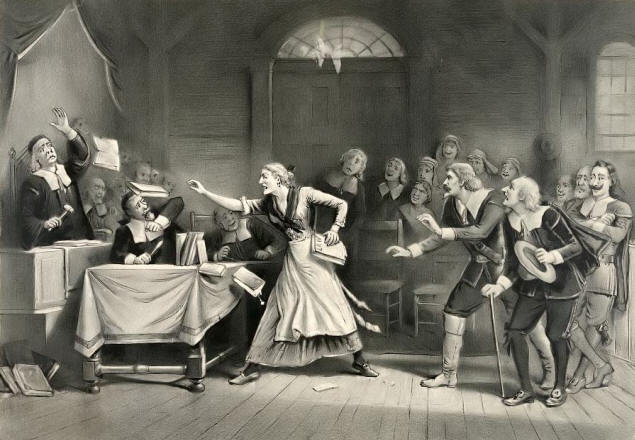
How Not to Hunt Witches
Friday, October 03, 2008
More on the PNW Presbytery's Leithart Debate
Before I do, however, I would like to say that I have great respect for Peter Leithart and consider him a sincere brother in Christ. He has demonstrated nothing but humble patience and forthrightness during this process, for which he is to be commended.
As acting chairman of the study committee, I first moved the recommendations of the Majority Report and then immediately presented a substitute motion consisting of the Minority Report’s recommendations. I then spent about 30 minutes presenting the findings of the Minority Report, which highlighted six areas in which the minority of the committee felt Leithart to be out of accord with the system of doctrine contained in our Standards. These areas concerned: (1) the covenant of works, (2) baptismal efficacy, (3) the imputation of Christ’s obedience, (4) the relationship of justification to sanctification, (5) union with Christ, and (6) final justification.
The case I was attempting to make was that the threads of Leithart’s deviations on these core doctrines, when woven together, form a single cloth that is not recognizably Reformed (see the Minority Report for details). In other words, this is not a matter of a mere slip of the pen or the use of infelicitous language, but a very consistent system of doctrine that bears little resemblance to what is taught in the Standards to which Leithart has vowed submission.
The response of the majority, given by Rob Rayburn, was that if the PCA proceeds to squash theological innovation and refuses to allow the Bible to take precedence over our Confession when the two are in opposition, then we will lose our vitality and relevance as a church and run the risk of sinking into ever-increasing obscurity. Furthermore, Rayburn's contention is that unless Leithart admits to explicitly denying what the Standards affirm, or explicitly affirming what they deny, then there can be no basis for finding him out of accord with the Standards on the matters in question.
From where I sat there wasn’t much by way of substantive response to the case that the minority made. The real concern on the part of the presbyters who spoke in favor of Leithart was that we not become overly narrow and that we do not discourage bold, pioneering theology.
The next step will be for some of us to formally complain against the presbytery, which, we expect, the presbytery will dismiss at our January meeting. If/when that happens, our complaint will go to the General Assembly level.
Continued prayers are asked for all involved.
Pacific Northwest Presbytery Overwhelmingly Approves Peter Leithart
Though the tenor of the three-hour debate was cordial, the level of discourse was rather disappointing in my view.
I will update in detail later tonight.
Peter Leithart and the Pacific Northwest Presbytery
The study committee was composed of seven men (four ministers [including me] and three elders). The majority report was signed by four men and concluded that Leithart’s views do indeed fall within the bounds of confessional Reformed theology, while the minority report, authored by yours truly, concluded that he falls outside the pale. Presbytery will act on the reports one way or another on Friday, and I will attempt to post an update when I can. In the meantime, please pray that God’s will would be done.
Wednesday, October 01, 2008
Of Binding, Loosing, and the Keys of the Kingdom of Heaven
But what’s the deal with those keys?
Jesus tells Peter in v. 19:
“I will give to you the keys of the kingdom of heaven, and whatever you bind on earth shall be bound in heaven, and whatever you loose on earth shall be loosed in heaven.”The Old Testament background to this statement, according to both Catholic and Protestant commentators, is Isaiah 22. Here Shebna, who had been King Hezekiah’s prime minister, is being removed from his office and replaced by Eliakim. God says:
“I will thrust you from your office, and you will be pulled down from your station. In that day I will call my servant Eliakim the son of Hilkiah, and I will clothe him with your robe, and will bind your sash on him, and will commit your authority to his hand. And he shall be a father to the inhabitants of Jerusalem and to the house of Judah. And I will place on his shoulder the key of the house of David. He shall open, and none shall shut; and he shall shut, and none shall open” (vv. 19-22).Though the metaphor is a bit muddled, virtually all commentators—whether Jewish, Catholic, or Protestant—agree that the keys and their function of binding and loosing refer to the power to make authoritative judicial pronouncements.
Some questions worth asking include: (1) Is it significant that Jesus used the singular pronoun when he said to Peter, “I will give to you the keys…”? (2) Is the seeming uniqueness of Peter’s role made less so by Jesus giving all the apostles the power to bind and loose two chapters later? (3) Why did Jesus not give a set of keys to all of them? (4) Does the fact that Eliakim’s is an “authoritative office” mean that the same is true of Peter’s role? (5) Was that office intended to outlive its first occupant, or did it die with Peter?
And perhaps the most challenging question of all: How could Jesus promise to ratify in heaven the fallible decrees of his earthly church?
Sunday, September 28, 2008
Will the Real "Rock" Please Stand Up?
Friday, September 26, 2008
Scratching the Surface of a Pivotal Passage
Since this is my blog and I’m a Protestant, I will call this view Option #1, and it goes like this: The thing upon which Jesus says he will build his church is Peter’s confession of Christ. Peter’s confession is immaterial and invisible rather than material and visible, and so it would seem to follow that the church he promises to build, like that confession, would be invisible.
Moreover, the locus of unity for those who take Option #1 would be Peter’s confession (or, the gospel), and the keys of the kingdom, together with the power to bind and loose would reside in the hands of those who share that confession of Christ.
The Catholic position, or Option #2, says that the thing upon which Jesus says he’ll build his church is Peter himself. This being the case, then it would seem to follow that the church he promises to build, like Peter, would be visible rather than invisible.
Further, the locus of unity for those choosing Option #2 would be Peter himself (or, the Petrine See). The power of the keys, then, would reside in the hands of those who have visibly succeeded the man to whom those keys were originally given (i.e., Peter).
What I plan to do for the next few posts is take each of the elements of this passage (the rock, the church, the keys) and expound them via a teacher or commentator representing each of our two options.
But that doesn’t mean you can’t start weighing in now….
Wednesday, September 24, 2008
The Visible Church or Visible Churches?
But on the other hand it can't be the visible church, either. Technically, we don't really believe in a visible church, do we? Sure, we believe in visible churches (self-governing bodies, whether independent congregations or denominations), but if that is what we're trying to illustrate then we should use the metaphor of a neighborhood comprised of individual homes, some bigger and some smaller. But in order for Lewis's house to illustrate "the visible church" then all the individual churches throughout the world would have to be visibly united in some way, just like the individual rooms in the house are visibly connected by a single roof (which, after all, is what a house is in the first place).
So if the point of the visible is to make apparent the invisible (as much as possible given the necessary qualifications), and if the invisible church is one, then wouldn't it follow that the visible church must be one as well? And to press it further, if what unites the invisible body is its Head, then wouldn't the visible body need a visible head in order to make its unity, well, visible?
Now if we deny this by saying that the visible church only needs an invisible Head and not a visible one, then doesn't that prove too much? Why do visible churches need a visible shepherd if the visible church doesn't?
Tuesday, September 23, 2008
The Bare Necessities
I plan to begin an extended consideration of Matthew 16:13-19 soon, but before I do I want to continue to explore C.S. Lewis's analogy a bit (for those just tuning in, Lewis likens the church to a house with many rooms, each of which represents a particular denominational tradition. The rooms open up to a common hallway, which represents what he calls "mere Christianity").Sunday, September 21, 2008
Little Boxes Made of Ticky-Tacky
Saturday, September 20, 2008
Our House. In the Middle of our Street.
I hope to interact with Horton’s People and Place once I’ve got some of it read, but in the meantime I’ll bait the hook by shamelessly piggybacking on my pal Mike Brown’s discussion of C.S. Lewis’s description of the church as a big house with many rooms, all connected by a hallway. The rooms, Lewis says, are our denominations and confessional traditions (there’s a Baptist room [with no beer], a non-denominational room [whose walls everyone refuses to acknowledge], and a Presbyterian room [stocked with Arturo Fuentes and single malt]). The hallway, on the other hand, is what Lewis calls “mere Christianity” (you know, those “essentials” that we all supposedly recognize and agree upon). So although we spend lots of time in our respective rooms, we also venture out into the hallway to chat with our various housemates.
Some questions that we may want to tackle include: (1) Does the illustration even make sense? Does “many rooms = one house” even correlate to “many denominations = one church”? (2) Who gets to determine where exactly the hallway is? Does “mere Christianity” include infant baptism? How narrow is this thing anyway? (3) If the hallway is defined by the ecumenical creeds, does that include all of them, or just the ones we like? (4) Can we see this house from the street, or is it one of those “invisible” houses?
And we would be remiss, of course, if we failed to ask whether this house has a “Roman Room” in it, or if Rome’s is a different kind of structure altogether.
And if so, which was built first?
Thursday, September 18, 2008
Death As a Stranger
Premodern man was fascinated with death, Kreeft argues, largely because it is the last true unknown. “A flat earth is more fascinating than a round earth because a flat earth has an edge, an end.” He points out that in Tolkien’s The Silmarillion, the world becomes round as the result of divine punishment:
“And those that sailed furthest set but a girdle about the Earth and returned weary at last to the place of their beginning; and they said, ‘All roads are now bent.’”Modern man, unlike his premodern counterpart, ignores death the way he would a stranger on the street. One of the reasons for this is our worshiping at the shrine of technology. In previous cultures the problem was how to conform our lives to bigger things outside of ourselves (like truth or God) by means of virtue, wisdom, or religion. In our day, the challenge we face is how to gain conquest over nature by getting the world to conform to us.
How does this relate to our ignoring of death?
If modern man believes that there is no higher purpose in life than his own pleasure (which is achieved through technology and its conquest over nature), then suffering becomes unendurable. The flipside of Nietzsche’s statement that “he who has a why to live can bear with almost any how” is also true: he who has no why cannot endure any how.
“The fact of death is the failure of our dream of divinity. No wonder we turn our face from it. Death’s face grins at us, and we must frown. In order to put a smile on our face, we must put the mask of a stranger on the face of death.”The most common defense against death, in other words, is not so much a good offense, but a yawn.
Kreeft concludes that if we do actually face death head on it would be like looking into the sun. Death, like God, says, “No man can see my face and live.” But if death only seems dark but is really light because it reveals the truth about ourselves, then death is neither an enemy nor a stranger, but a friend.
We’ll explore friendship with death in our next installment, so stay tuned....
Wednesday, September 17, 2008
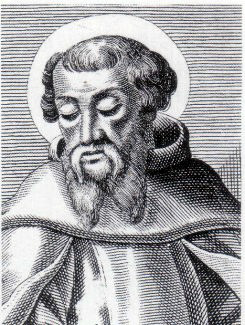
Who Said That?
Tuesday, September 16, 2008
Death As An Enemy
Death’s first face, argues Kreeft, is that of an enemy. Its subsequent faces are that of a stranger, a friend, a mother, and finally, a lover.
“If death does not first appear to us as an enemy, then it cannot appear truly as a friend, or as anything greater than a friend. Death cannot immediately appear as a friend. Death cannot be a friend; it can only become a friend, after first being an enemy. Otherwise, it is not death that is a friend, but something else we confuse with death, such as sleep, or rest, or peace.”Death’s initial posture as an enemy flies in the face of the American fairy tale that “death is a natural part of life.” All the great myths throughout history argue against such euphemism, seeing death as disastrous and catastrophic. Stoicism, Kreeft insists, is not courageous but cowardly, for it refuses to face what we inwardly know to be true because death screams it at us: something has gone horribly wrong.
There is a puzzle here, Kreeft writes, because death, which on one level is most natural, feels to us to be most unnatural.
“We are shocked at the irreversibility of death although it is utterly familiar, utterly universal, utterly natural. We find the natural unnatural. Why? Let us be shocked at our shock. It is shocking that we are shocked at the inevitable, the familiar, the expected.”The naturalness of death is seen in the cycle of biology. Death, in this sense, is the fertilizer of life. Yet we still rebel against nature, we have “a lover’s quarrel with the world” at this very point. The reason for this, Kreeft argues (quoting the Preacher), is that “God has put eternity in man’s heart” (Ecc. 3:11).
Furthermore, death is inextricably connected with sin and guilt. At this point Kreeft suggests a “thought experiment” in which the reader supposes for a moment that there is a God. This supposition serves to make some sense out of the strong intuition we have that connects death with sin and guilt.
“If death is indeed the consequence, symptom, and sign of sin, we are even worse off than we thought. We see in every death not only our defeat but our guilt. This is worse even than defeat.”But there is light even in this cave. Kreeft quotes George MacDonald: “Ah, I would not lose my blame! In my blame is my hope.” As Celia says in T.S. Eliot’s The Cocktail Party:
“I should really like to think there’s something wrong with me—because, if there isn’t, then there’s something wrong with the world itself—and that’s much more frightening!”Thus ironically, “there is hope: we are guilty of death.” To blame ourselves is to vindicate reality, and ultimately, to vindicate God in the process.
Sounds a bit like good ol’ fashioned law/gospel preaching, innit?
Sunday, September 14, 2008
Love Is Stronger Than Death
In his book Kreeft argues that death has five "faces," or assumes five different postures as it confronts us, and as we confront it. Death is (1) an enemy, (2) a stranger, (3) a friend, (4) a mother, and (5) a lover."Death is the one pathway through which all people at all times raise the question of the absolute, the question of God. The last excuse for not raising the God-question is Thoreau's 'one world at a time.' Death removes this last excuse."
I hope to take us through some highlights from Love Is Stronger Than Death, so don't touch that dial.
Saturday, September 13, 2008
Rome vs. Geneva: Some Concluding Remarks
First, I hope that we have all learned, disagreements notwithstanding, that we need to treat one another with charity and respect. If I may point the finger at my own tradition, it is often those on my side of the debate that doubt the salvation of those on the other, while our opponents, even in the midst of their lofty claims about the Catholic church, still grant that those outside her communion are separated brethren whom they expect to see in heaven one day.
And make no mistake, the Catholic’s claims are profound and grandiose and, well, downright b@ll$y. Speaking for myself, I had never considered those claims before, but instead assumed that Protestants and Catholics simply came to different exegetical conclusions when reading Scripture. The fact is, I learned, that the real disagreement between us is located only as we peel back a further layer beyond our respective exegesis and systematics.
And this is where the confessional Protestant feels a bit sucker-punched. We have always boasted that, unlike evangelicals, we read the Scripture in conjunction with, rather than in isolation from, those who have gone before us. The Catholic’s question at this point is, “With which group, of all who have gone before you, do you read the Scriptures in conjunction? The Methodists? The Mormons? The Anabaptists? Or, by ‘those who have gone before us’ do you simply mean those with whom you agree?”
I will be the first to admit that this is a very challenging question which I have not heard answered to my satisfaction. More work needs to be done on this point.
Putting aside the authority question and moving on to systematic and exegetical issues, I still maintain that the Reformed carry the day. Despite the fact that, according to Catholicism, we have no business putting forth our interpretations over against Rome’s, I just can’t get around the superiority of the Reformation’s treatment of salvation as a whole, together with its exposition of justification/imputation on the one hand, and sanctification/infusion on the other, weaving both loci together with a common, covenantal thread.
Some areas where I think Catholics need improvement include more exegetical precision, especially with respect to Paul’s courtroom language and his doctrine of the law. Some basic principles also need to be put forward concerning how we read the early fathers, principles that don’t fall into the same circularity with which they charge Protestants when we read the Bible.
At the end of the day, I am both optimistic and pessimistic. Though I am doubtful that visible, institutional unity will be achieved in the near future, and am hopeful that a more grassroots type of unity can be fostered, according to which we recognize one another as worshipers of the same Savior.
In conclusion, I do hope our Catholic readers will stick around and join in whatever subsequent conversations we have here. And though this post will wrap up the Catholic/Protestant debate on this blog, I imagine that I will continue to address the authority question and the charge of individualism in some form or another, at least as long as it is still bugging me.
Please feel free to weigh in with elaborations on or challenges to anything I’ve said. And if you have any ideas for upcoming topics, please don’t hesitate….
Thursday, September 11, 2008
Apostolicam Ecclesiam: Tertullian vs. Turretin on the Church's Apostolicity
Wednesday, September 10, 2008
Catholicam Ecclesiam: Cyril vs. Turretin on the Church's Catholicity
First, Cyril of Jerusalem:
“And if ever you are sojourning in cities, inquire not simply where the Lord’s House is (for the other sects of the profane also attempt to call their own dens houses of the Lord), nor merely where the Church is, but where is the Catholic Church. For this is the peculiar name of this Holy Church, the mother of us all.”
And Francis Turretin:
“If to be called catholic is a mark of the church, this arises from God; but the Scripture is entirely silent about it. Or it arises from opponents; but they are not our judges. Or it arises from their own people; but what right have they to assume for a mark the name which they ascribe to themselves, since heretics are accustomed to set up in front of themselves specious names? … If the fathers formerly distinguished the orthodox from heretics by the name catholic, they did this… on account of the catholic and orthodox doctrine that they held…. Cyril teaches that ‘the church is called Catholic because it teaches fully and unfailingly all the doctrines which ought to be brought to men’s knowledge.’”
The issue here is not whether a church's catholicity is a matter of doctrine or not (for it surely is). The issue, rather, is whether it is by a church's doctrine alone that such a determination is to be made, or whether other factors, like pedigree and universality, are to be taken into account.
Well...?
Tuesday, September 09, 2008
Sanctam Ecclesiam: Clement vs. Calvin on the Church’s Holiness
"When the Church points to sanctity as one of her notes, it is manifest that what is meant is a sanctity of such a kind as excludes the supposition of any natural origin. The holiness which marks the Church should correspond to the holiness of its Founder, of the Spirit Who dwells within it, of the graces bestowed upon it. A quality such as this may well serve to distinguish the true Church from counterfeits. It is not without reason that the Church of Rome claims to be holy in this sense. Her holiness appears in the doctrine which she teaches, in the worship she offers to God, in the fruits which she brings forth."
OK, opine away....
Sunday, September 07, 2008
Unam Ecclesiam: Irenaeus vs. Turretin on the Church's Unity
Four points have been raised in the comments by Andrew McCallum concerning how we should read the early fathers. First, it is just as erroneous for the Catholic to insist that “If Protestants would just read the fathers they’d become Catholic” as it is for Protestants to insist that “If Catholics would just read the Bible they’d become Protestant.” The fathers must be read with an eye both to their philosophical and cultural milieu and their interpretive framework.
Secondly, we need to address the fact that, to the Protestant, it seems like the fathers are interpreted by Catholics anachronistically from the standpoint of contemporary Catholic dogma. In the light of the Catholic being bound by his Church’s interpretation of the fathers, how can reading them lead to anything but a fait accompli?
Thirdly, we need to discuss what exactly the fathers believed about their own authority. Did Clement or Polycarp believe they were writing with infallible authority? To the Protestant it appears that the Catholic Church’s insistence that the fathers, as interpreted by the Church, are infallible is a classic example of begging the question. Whether or not the fathers expected to be read as infallible is precisely the issue to be proven or disproven, not taken as an a priori.
Lastly, the Catholic must demonstrate that his position is in fact falsifiable. Is it possible that the Catholic claim to authority can turn out to be wrong? And if so, how would we know?
That said, please weigh in on these two representative statements about the church’s unity, keeping in mind these larger interpretive issues.
Friday, September 05, 2008
Clement and Augustine on Apostolic Succession
Thursday, September 04, 2008
Exegesis, Systematics, and the Authority to Do Them
Tuesday, September 02, 2008
The Merits of Merit: Meritum De Congruo vs. "Suing God"
It is here especially that we must pay close attention to precision of language and definition. In order to properly represent the Catholic position and compare and contrast it with the Reformed view, therefore, we must turn to our respective Catechism and Confession.
With the exception of the mention of “covenant,” both of these expressions are quite similar in their disallowance of any talk of “strict merit” (meritum adÅ“quatum sive de condigno) with respect to man’s relationship with his Creator. Catholicism’s “covenantal” context for merit is seen in CCC 2008, which says that “The merit of man before God in the Christian life arises from the fact that God has freely chosen to associate man with the work of his grace.” It continues:The distance between God and the creature is so great, that although reasonable creatures do owe obedience unto him as their Creator, yet they could never have any fruition of him, as their blessedness and reward, but by some voluntary condescension on God's part, which he hath been pleased to express by way of covenant (Westminster Confession of Faith VII.1).
… the merit of good works is to be attributed in the first place to the grace of God, then to the faithful. Man’s merit, moreover, itself is due to God, for his good actions proceed in Christ, from the predispositions and assistance given by the Holy Spirit.Now the temptation for the Protestant when we hear the phrase “the merit of good works” is to say, “Aha! So you Catholics do believe that you earn your salvation!” Not so fast, though:
Filial adoption, in making us partakers by grace in the divine nature, can bestow true merit on us as a result of God’s gratuitous justice. This is our right by grace, the full right of love, making us “co-heirs” with Christ and worthy of obtaining “the promised inheritance of eternal life” (CCC 2009).“Merit” for the Catholic appears to be similar to what we Protestants might call a “claim” upon God, one that is rooted in our status as adopted sons of God the Father. In Reformed language we might say, as the Puritans often did, that we ought to “sue God” in order to claim his covenant promises for ourselves. Furthermore, we confess that our works will be tried and (graciously) rewarded on the last Day (Westminster Confession XXXIII.1).
The charity of Christ is the source in us of all our merits before God. Grace, by uniting us to Christ in active love, ensures the supernatural quality of our acts and consequently their merit before God and before men. The saints have always had a lively awareness that their merits were pure grace (CCC 2011).My question for you readers, then, is this: What is the difference between the Catholic saying the believer earns congruent merit, and the Protestant saying that God can be taken to court and convinced to pay up?